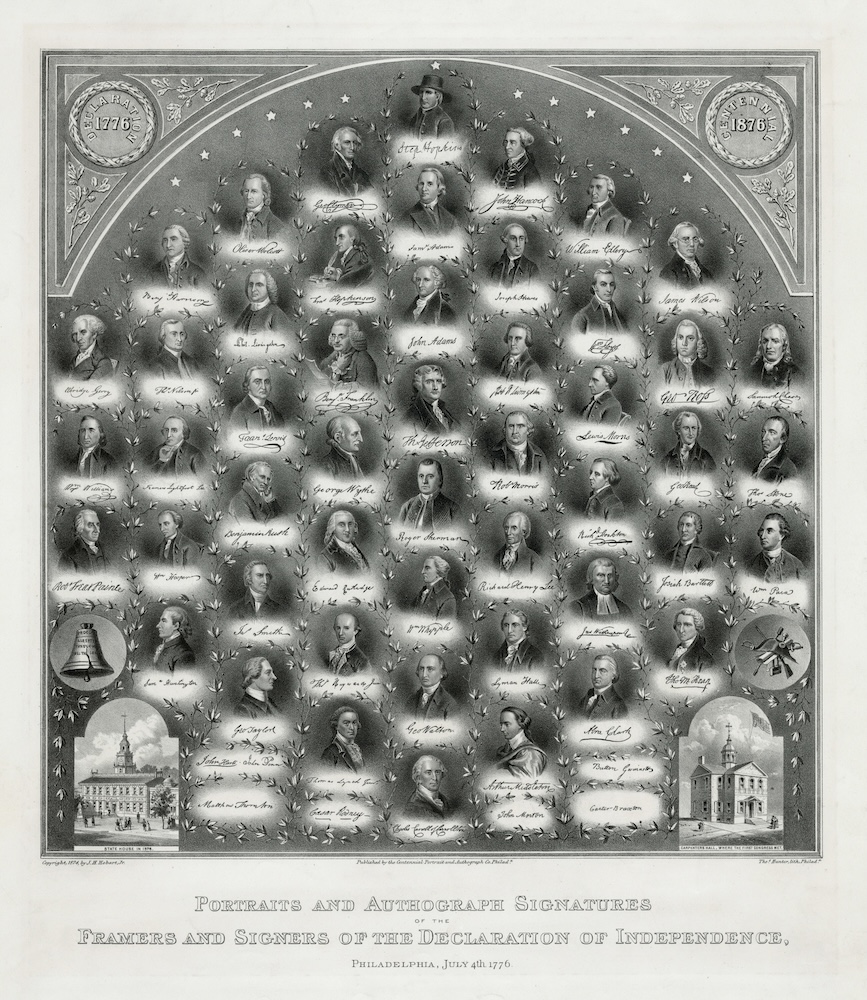
On July 4th, 2026, the United States will celebrate America250, a historic milestone: 250 years since the signing of the Declaration of Independence of the United States of America. Scala commemorates this important anniversary through the numerous & diverse images and historical documents in its archive.
t was 1776 when fifty-six delegates gathered in Philadelphia and laid the foundation for a new nation, asserting for the first time in modern history a people’s inalienable right to self-determination – life, liberty, and the pursuit of happiness. That document, drafted primarily by Thomas Jefferson, represented not only a break with the British crown but articulated the universal principle —”all men are created equal”—destined to resonate far beyond American borders, and to inspire revolutions and democratic movements around the world.
How does one preserve the memory of such a crucial moment?
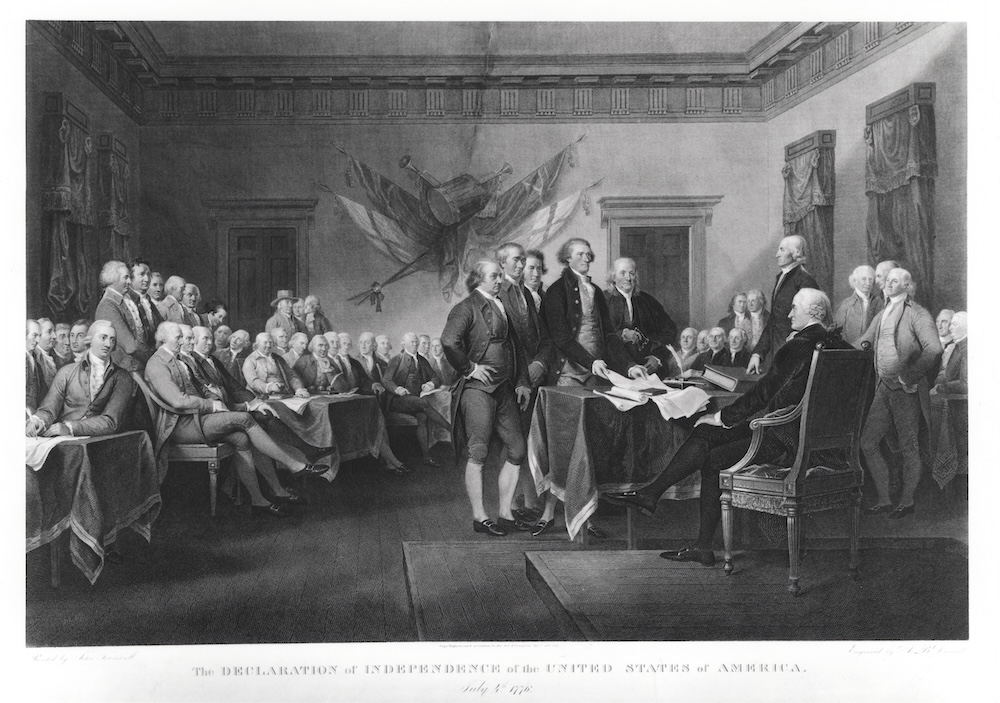
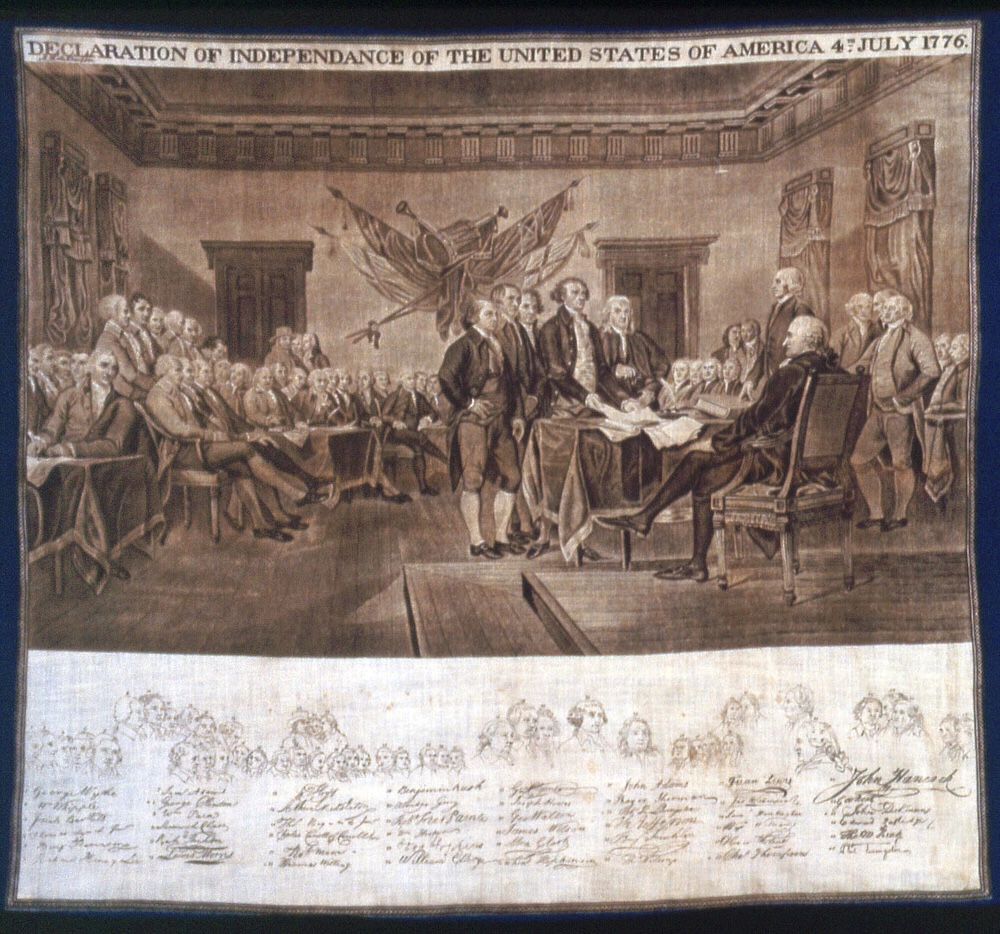
If there’s one image that has etched the moment of the Declaration of Independence in our collective memory, it’s undoubtedly “Declaration of Independence“ by John Trumbull (1817-1819). This monumental work, now displayed in the Rotunda of the United States Capitol in Washington, is not simply a painting: it’s the official representation of that founding event.
Trumbull was not a mere observer. He was a veteran of the Revolutionary War and aide-de-camp to George Washington. He had lived through those revolutionary years firsthand, and had as a goal the creation of a visual record of the Revolution that would be both artistically sublime and historically accurate. Between 1786 and 1817, he created a series of paintings dedicated to key moments of the War of Independence, but “Declaration of Independence” remains his most iconic work.
The scene depicts the moment when the Committee of Five – Thomas Jefferson, John Adams, Benjamin Franklin, Roger Sherman e Robert Livingston – presents the draft of the Declaration to the Continental Congress on June 28, 1776. Forty-seven figures crowd the composition, all portrayed with meticulous attention to physiognomic detail. Trumbull actually met many of the surviving signers in person to capture their authentic features, transforming the painting into a sort of collective portrait of the revolutionary leadership.
What makes this work so powerful is not only its documentary precision but its ability to elevate a political moment—the presentation of a document— into an epic event. The neoclassical composition, theatrical lighting, and solemn poses all contribute to transform these men into founding heroes, custodians of universal values.
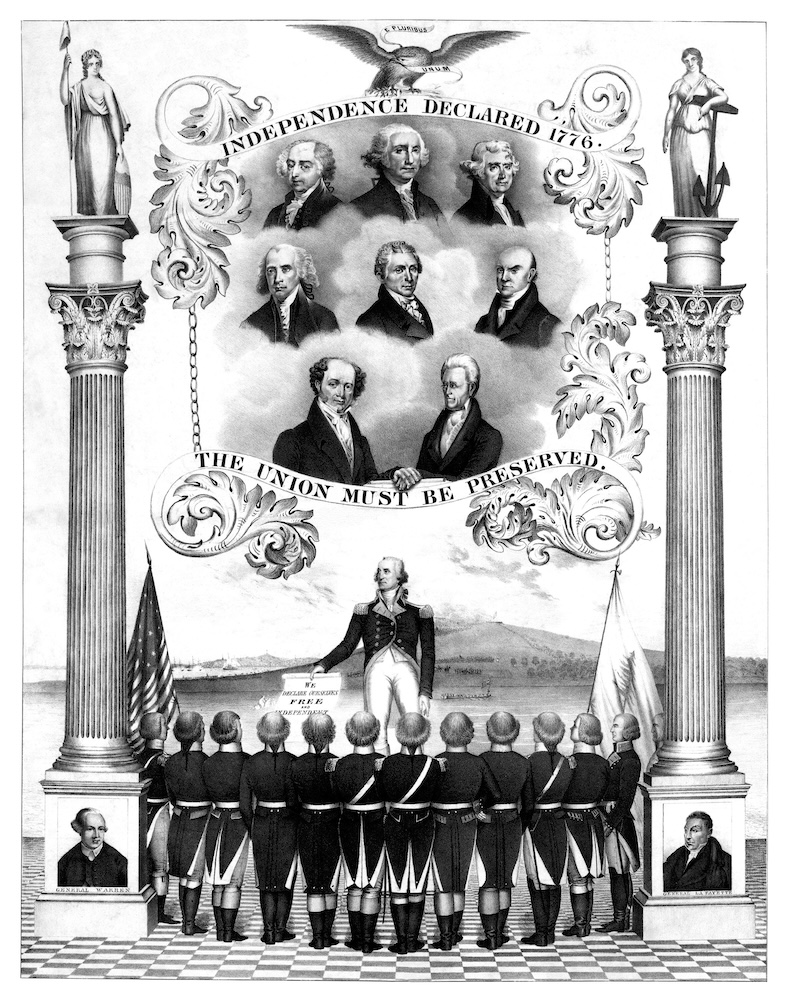
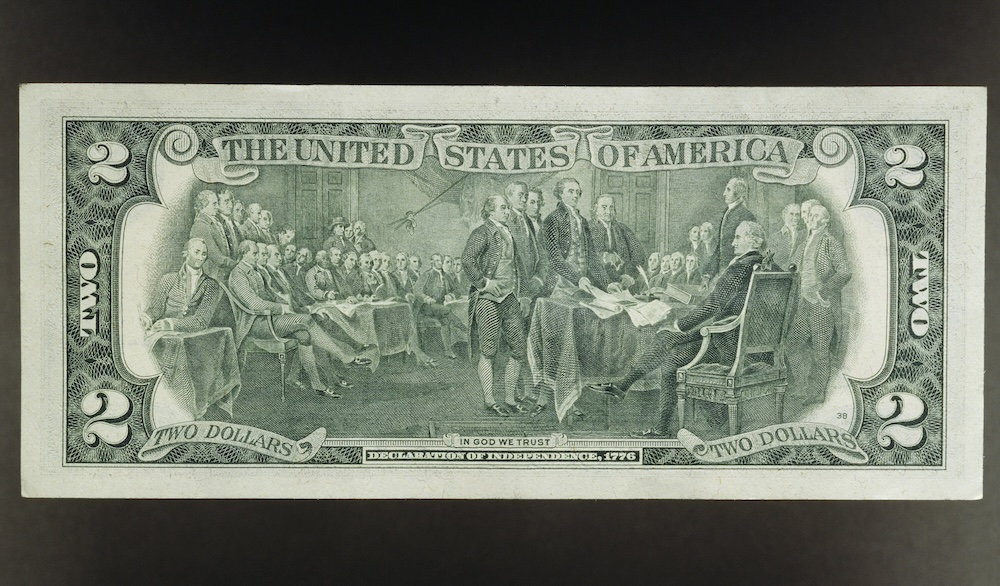
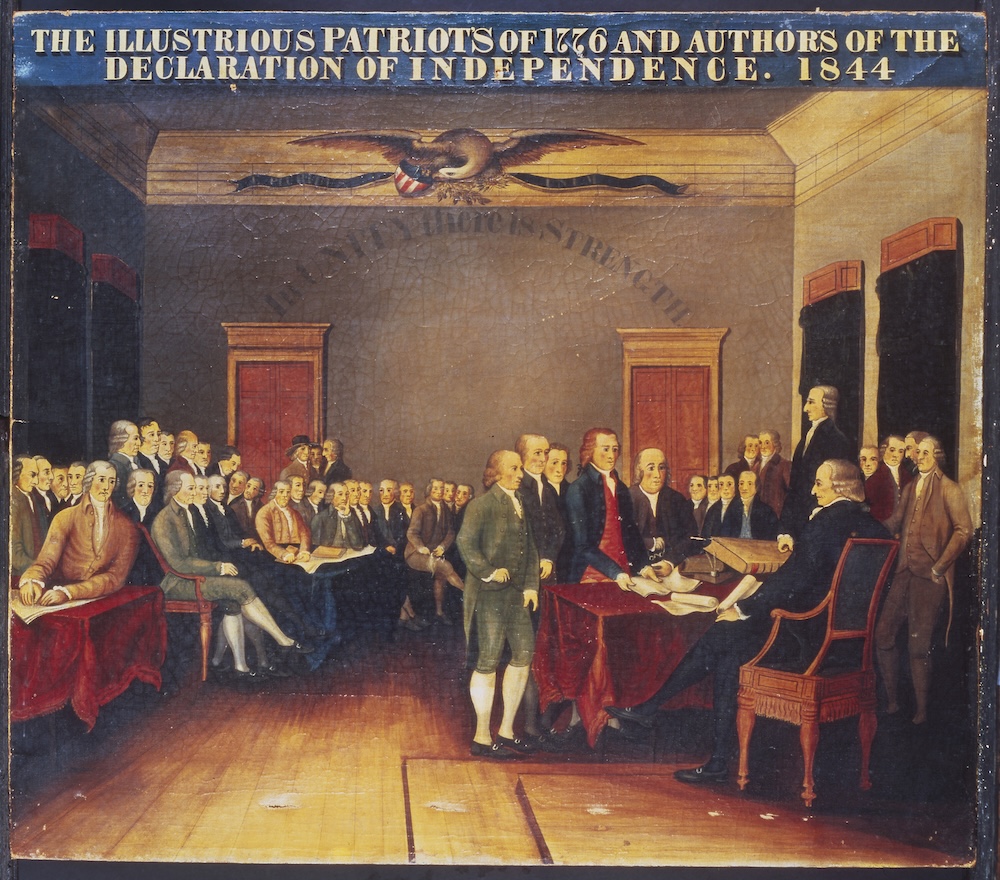
John Trumbull’s “Declaration of Independence” represents a prime example of how an image can transcend its original form to become a cultural icon disseminated throughout diverse media. This work didn’t remain confined to the halls of the Capitol in Washington: its composition was replicated in other paintings, various types of prints, and reproductions that multiplied its visual reach exponentially centuries later it even makes its way on currency with the US’s 2 dollar bill.
At the time, copper engravings and lithographs were the primary means of disseminating images. Trumbull’s painting was translated into prints that reached homes, schools, public offices, and taverns, transforming a historic moment into a widely shared image that became a collective memory. Thanks to these reproductions what would have otherwise remained visible only to a few privileged visitors made available to a wide and diverse audience. In this case, as in many others in distant times and lands, images successfully bridged literacy barriers.
Trumbull’s “Declaration of Independence” thus became not only an artistic document but a tool of propaganda and identity-building, whose repeated image helped crystallize in the American collective imagination the representation of that founding moment.
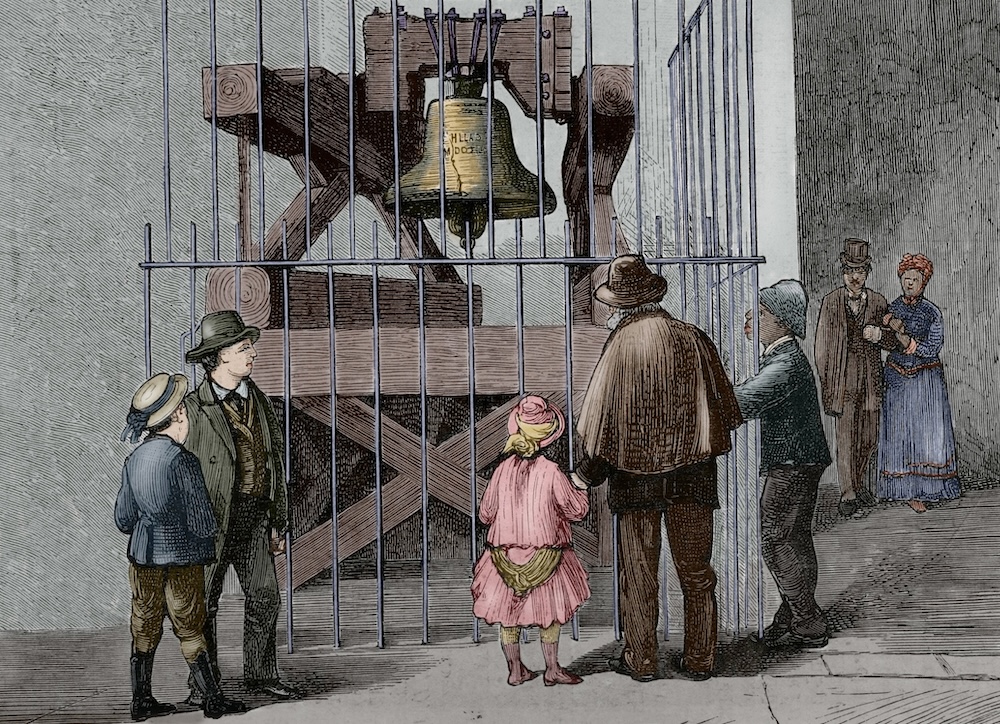
Legend has it that the Liberty Bell was rung on July 4th, 1776 to celebrate the adoption of the Declaration. The truth is a bit more complicated: the bell was already cracked before that historic date. The story goes that it finally split in 1846, while being rung to mark George Washington’s birthday. The inscription engraved on it comes from the Book of Leviticus: “Proclaim liberty throughout all the land” — a passage chosen with remarkable historical irony, given that slavery was still legal at the time. The bell’s crack has never been repaired, and today it stands as one of America’s most iconic symbols in Philadelphia.
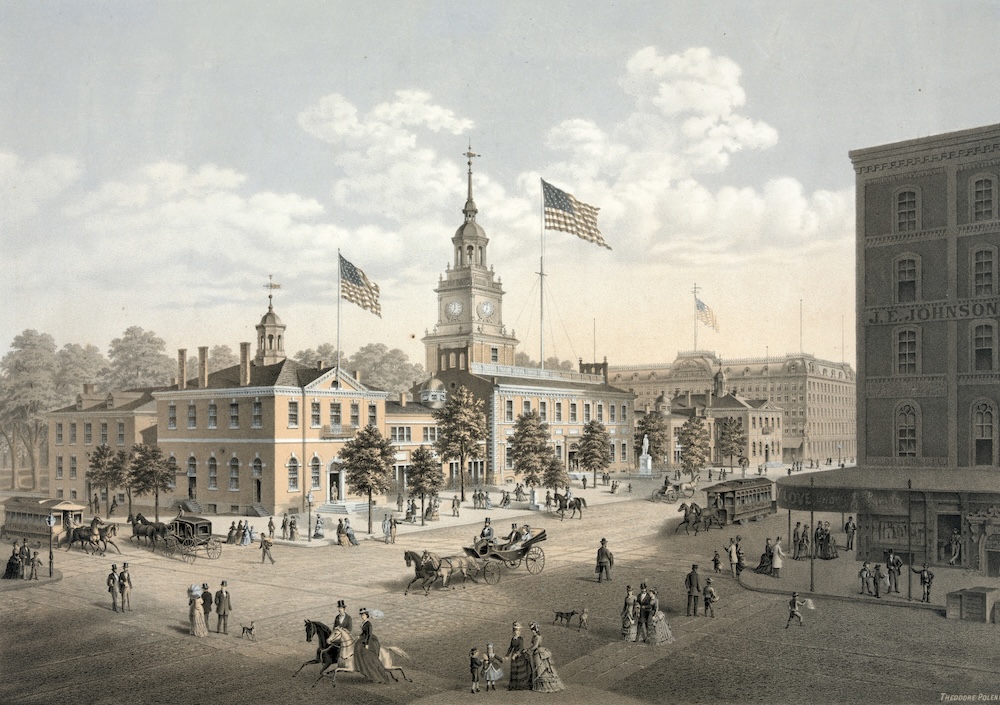
Philadelphia was the largest and most cosmopolitan city in the American colonies in 1776. Independence Hall, where the Declaration was signed, originally served as the Pennsylvania State House. Delegates chose this location partly for practical reasons: it sat in a fairly central position relative to the thirteen colonies. Interestingly, during the sweltering summer of 1776, the windows of the hall were kept shut and locked — despite the oppressive heat — to ensure complete secrecy over the debates taking place inside.
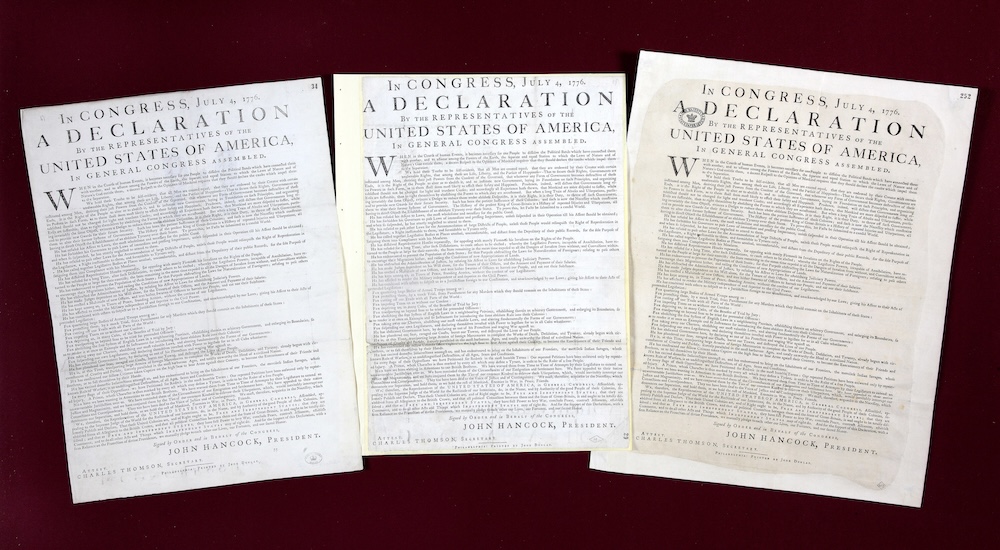
Contrary to popular belief, not all delegates signed the document on July 4th, 1776. That day, Congress formally adopted the text, but the majority of the 56 signers put pen to paper on August 2nd, 1776. Some didn’t sign until months later. Congress President John Hancock signed his name in an intentionally oversized script — legend says it was a direct challenge to the King of England, a bold way of showing he wasn’t afraid. His name became so iconic that today “John Hancock” is American slang for anyone’s signature.
Another aspect tied to the birth and construction of the image of the United States of America is was Mount Rushmore – click here for a brief exploration of Mount Rushmore.
If you’d like to find other specific content on this topic, request a custom search.
****
In the cover: The Declaration of Independence, July 4, 1776. Yale University Art Gallery, New Haven, USA – NL01724