On the centenary of Claude Monet’s death, Scala is pleased to dedicate a brief botanical and visual a journey through the colors and fragrances of the garden the famous master of Impressionism loved the most.
Claude Oscar Monet was born on November 14, 1840, in Paris. He spent his childhood in Le Havre, where he met the painter Eugène Boudin, who introduced him to plein air landscape painting. He later moved to Paris until 1874, when, together with Manet, Degas, Renoirand others, he took part in the first exhibition of the “Impressionists”.
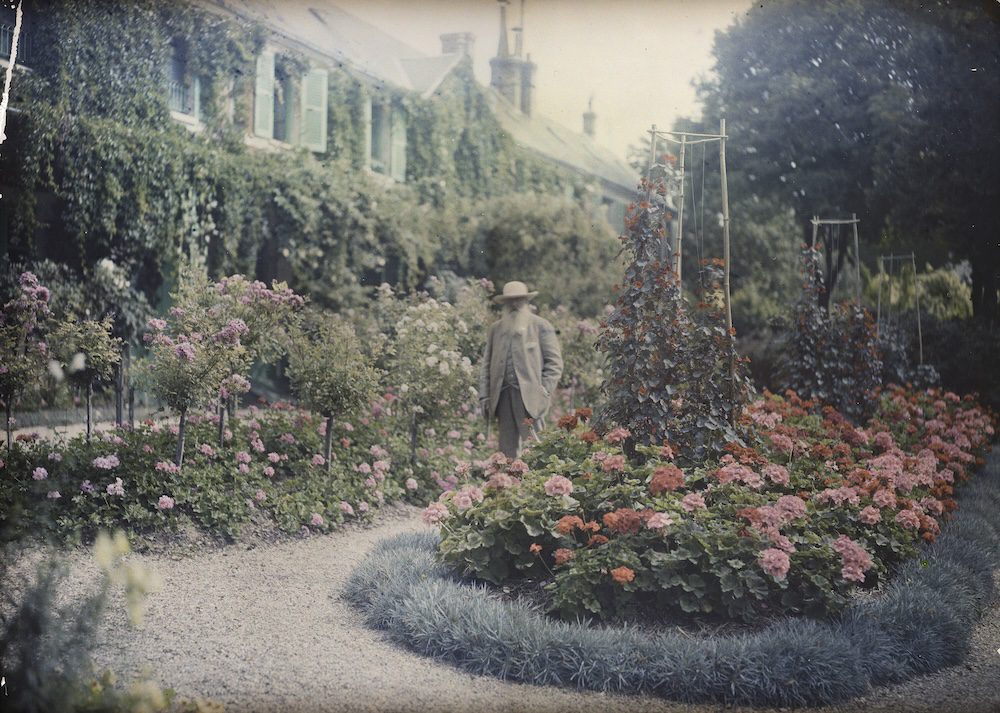
In 1883, at the age of 43, Monet discovered Giverny—reportedly from the window of a train—and fell in love with it. He rented the “Maison du Pressoir,” a large pink-plastered house with green shutters. In 1890, Monet purchased the house and began a major transformation: the Clos Normand with its flower-lined paths, and then—in 1893—the acquisition of adjacent land to create the water garden with the lily pond and the Japanese Bridge. The house was meant to blend with the garden. He added a veranda, a pergola covered with climbing roses, and trained Virginia creeper along the façade. The building adjacent to the main house became his first studio.
Monet died on December 5, 1926, after spending exactly 43 years of his life and career in Giverny, leaving a legacy that continues to transform the way we see nature and light.
The garden at Giverny was not simply a peaceful place to relax for Monet: it was his open-air studio, a living work of art that he designed with the same care he devoted to composing a painting. Here are the five flowers that, more than any others, shaped his art and landscape.
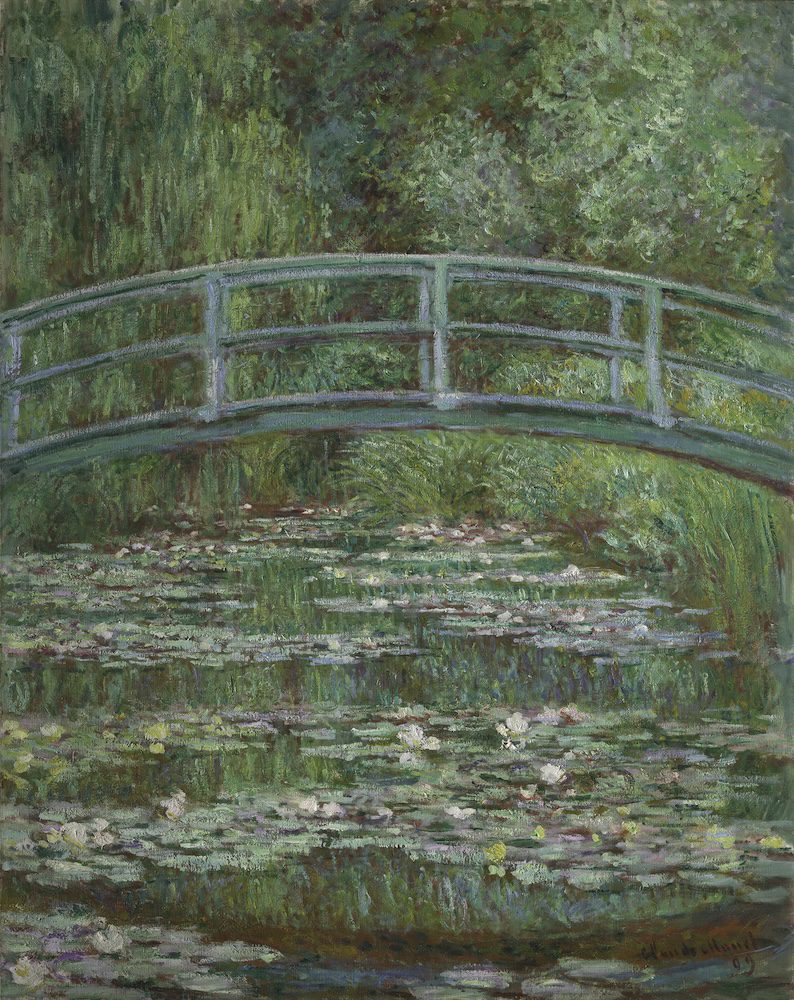
Water lilies are, without a doubt, Monet’s ultimate symbol. He painted them obsessively: three hundred paintings, forty of them large-scale. He created the pond by diverting a small stream, the Ru, covered it with water lilies, and had the famous Japanese bridge built over it.
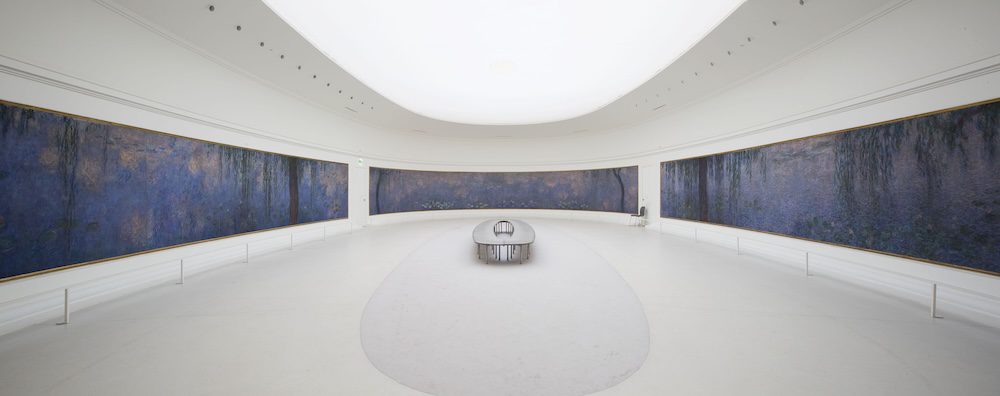
In 1920, Monet offered the French state twelve large Water Lilies panels, each about four meters long, installed in 1927 in two oval rooms of the Orangerie des Tuileries. An extraordinary gift, almost a painted testament.
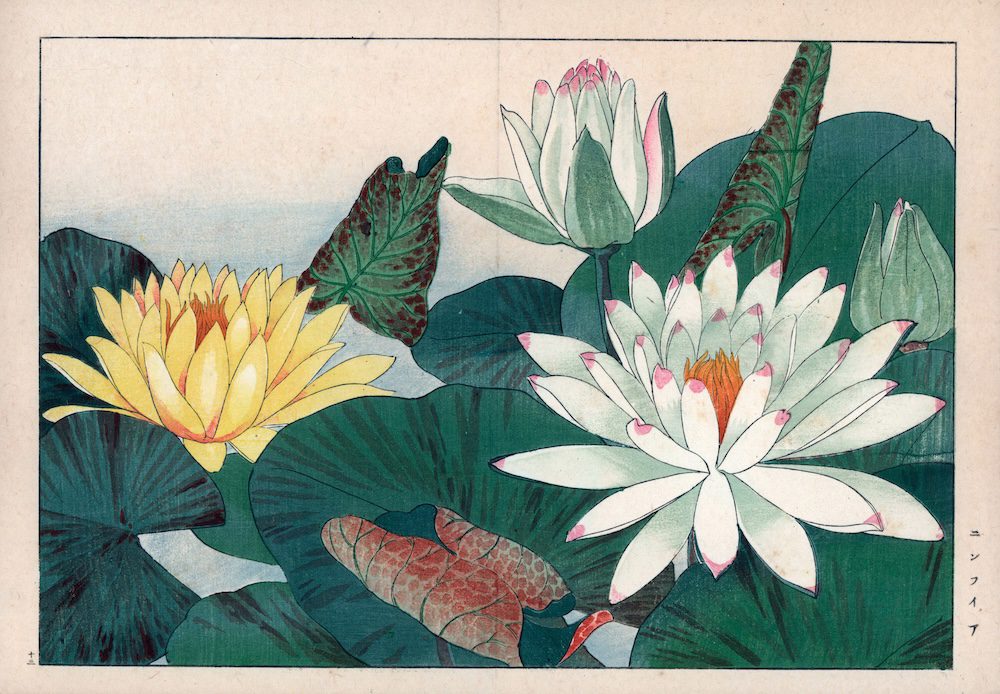
The water lily (Nymphaea) is an aquatic flower of ancient origin: the genus includes about fifty species distributed across all continents, from the tropical waters of Asia and Africa to the temperate lakes of Europe and North America. Its name derives from the water nymphs of Greek mythology, testifying to the fascination this flower has exerted since antiquity.
During the Renaissance and Baroque periods, scientific interest in flora led artists such as Albrecht Dürer and later Dutch and Flemish masters of naturalistic illustration, to depict the water lily with near-obsessive precision. In the eighteenth century, with the arrival in Europe of exotic varieties from the colonies, interest grew even stronger, fueled by the fashion for romantic and picturesque gardens. It was Impressionism, however, that established the water lily as an absolute icon of Western art.
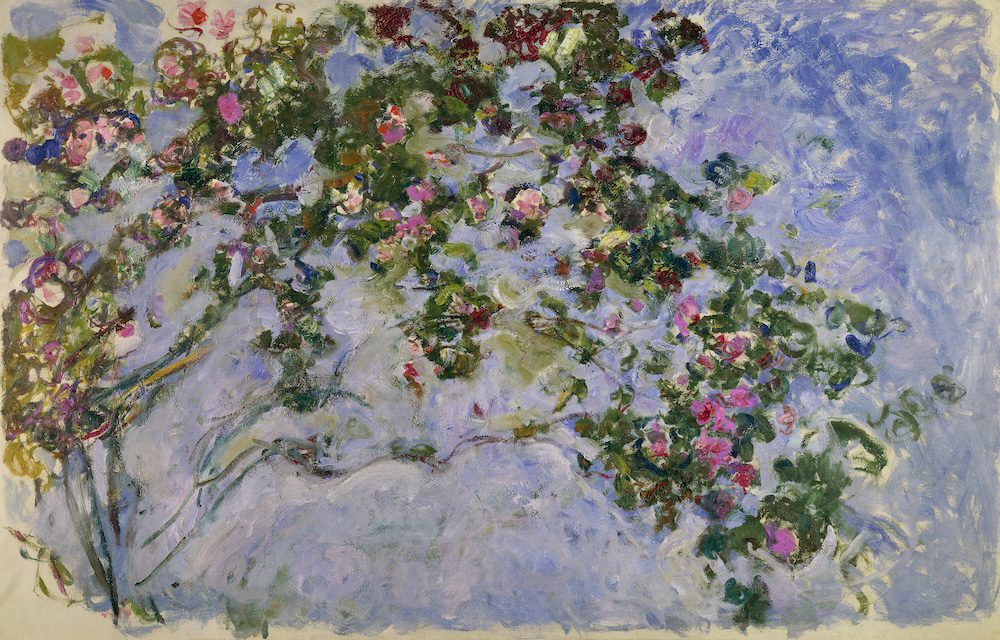
Monet was also passionate and dedicated to the rose, the most romantic among the flowers. At Giverny, he grew them along pergolas and arches framing the paths of the Clos Normand, the garden in front of the house. Climbing, clustered, in shades of pink, white, and crimson, they created true cascades of color.
In his paintings, roses appear as a vibrant backdrop, a floral architecture framing figures and landscapes. Monet personally tended the varieties, corresponded with the best nurserymen in Europe, and it was not uncommon to find him kneeling among the flowerbeds at dawn before picking up his brush.
The rose belongs to the genus Rosa, of the Rosaceae family, and includes over three hundred wild species and thousands of hybrid varieties developed over the centuries.
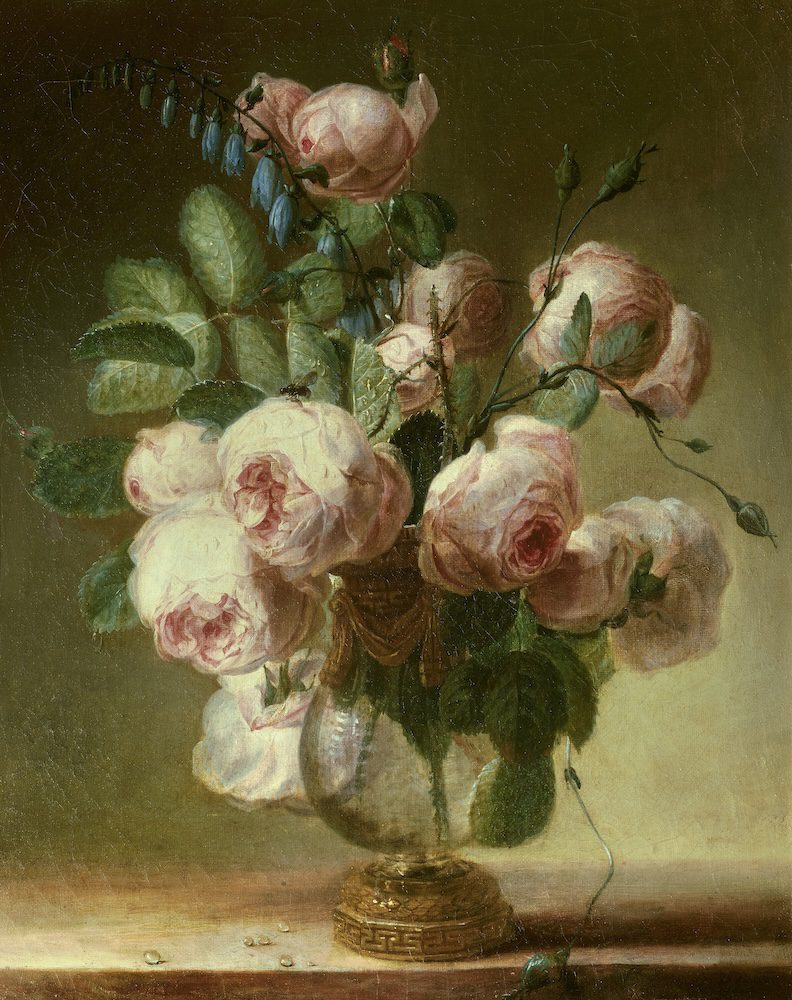
The history of the rose in French painting is inseparable from the rise of still life as an independent genre, which found fertile ground in France starting in the seventeenth century. The painter who brought this language to its highest elegance was Pierre-Joseph Redouté, known as the “Raphael of flowers,” active between the eighteenth and nineteenth centuries. His botanical plates for the volume Les Roses (1817–1824), commissioned by Empress Joséphine Bonaparte—an avid rose grower at Malmaison—remain among the most celebrated botanical illustrations in Western history: scientifically precise and at the same time of incomparable artistic grace.
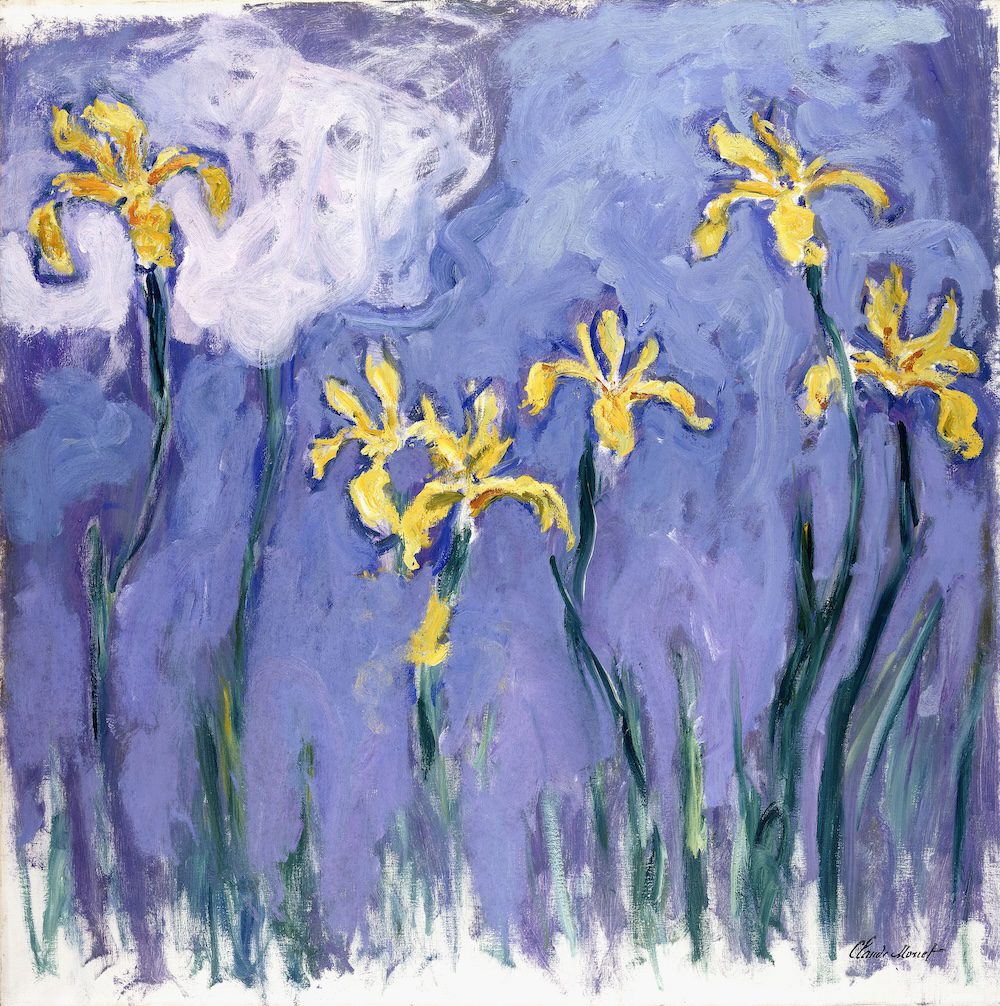
Irises were also among Monet’s favorite flowers and he appreciated their springtime explosion of color. At Giverny, he planted them in rows along the paths of the Clos Normand and around the pond: purple, yellow, white, blue—a natural palette that bloomed every May in harmony with his paintings.
In Monet’s works, irises often appear as patches of pure color, almost abstract, anticipating the painterly solutions of the late Water Lilies. Their slender stems and rippling petals lent themselves perfectly to his technique of short, closely spaced brushstrokes.
The genus Iris belongs to the Iridaceae family. The name comes from the Greek word for “rainbow,” a tribute to the extraordinary range of colors of its flowers, from white to yellow, orange to deep purple, and even near-black tones.
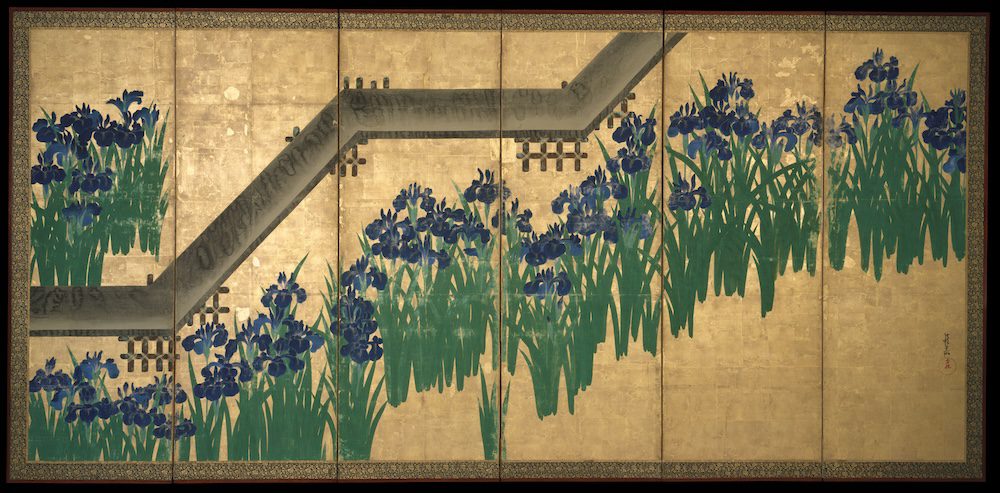
In Greek mythology, Iris was the goddess of the rainbow and messenger of the gods, a figure bridging the celestial and human worlds. This role of mediation transferred over time to the flower itself, which in medieval European cultures became an emblem of the Virgin Mary and royal virtues. It is in modern painting, however, that the iris achieved its greatest visibility: Vincent van Gogh made it one of the most famous subjects of his work. In Japan—so influential on late nineteenth-century European painters—the iris, known as kakitsubata or ayame, had long been a favored subject of screen painting and woodblock printing, as seen in the splendid works of Ogata Kōrin depicting the irises of Yatsuhashi.
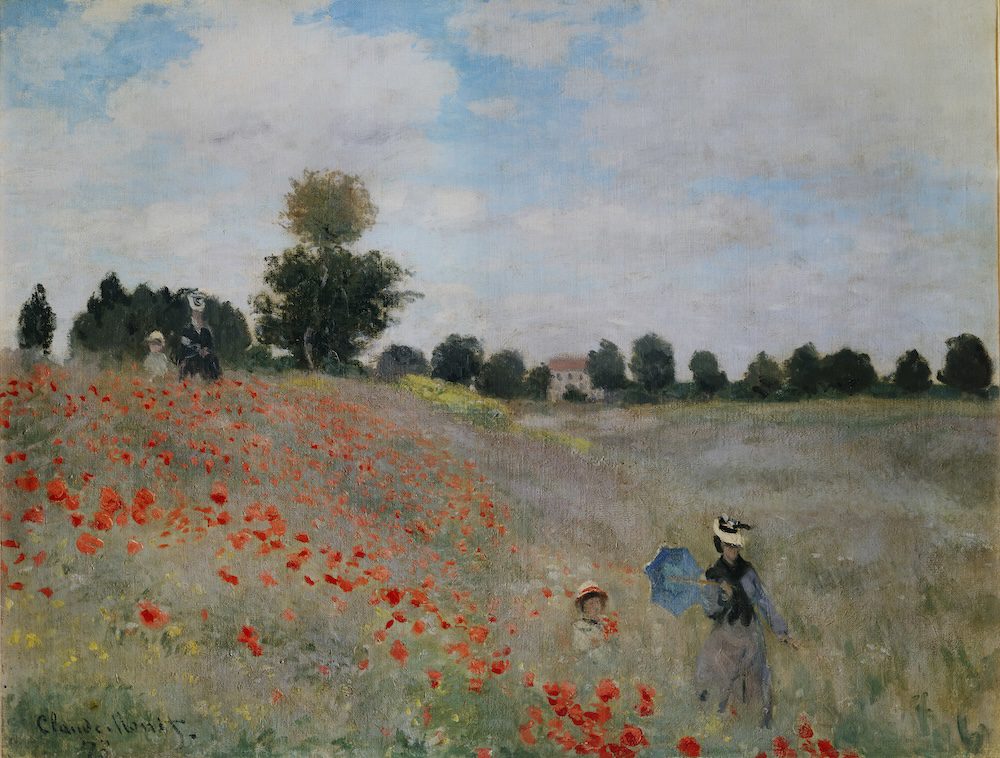
As early as 1874, at the first Impressionist exhibition, Monet presented Poppy Field, one of his most famous and beloved paintings. Camille and his son Jean walk through a field of red poppies under a Norman sky: one of the most iconic images of Impressionism.
Poppies grew spontaneously in the fields around Giverny, and Monet encouraged them in his garden as well. Their bright red, vibrant under the summer light, was for him the color of warmth and the fleeting moment: impossible to hold onto, impossible not to paint.
The most common species in European fields is Papaver rhoeas, the red corn poppy, a long-time companion of wheat crops. Quite different is Papaver somniferum, the opium poppy, native to the eastern Mediterranean and cultivated for at least six thousand years.
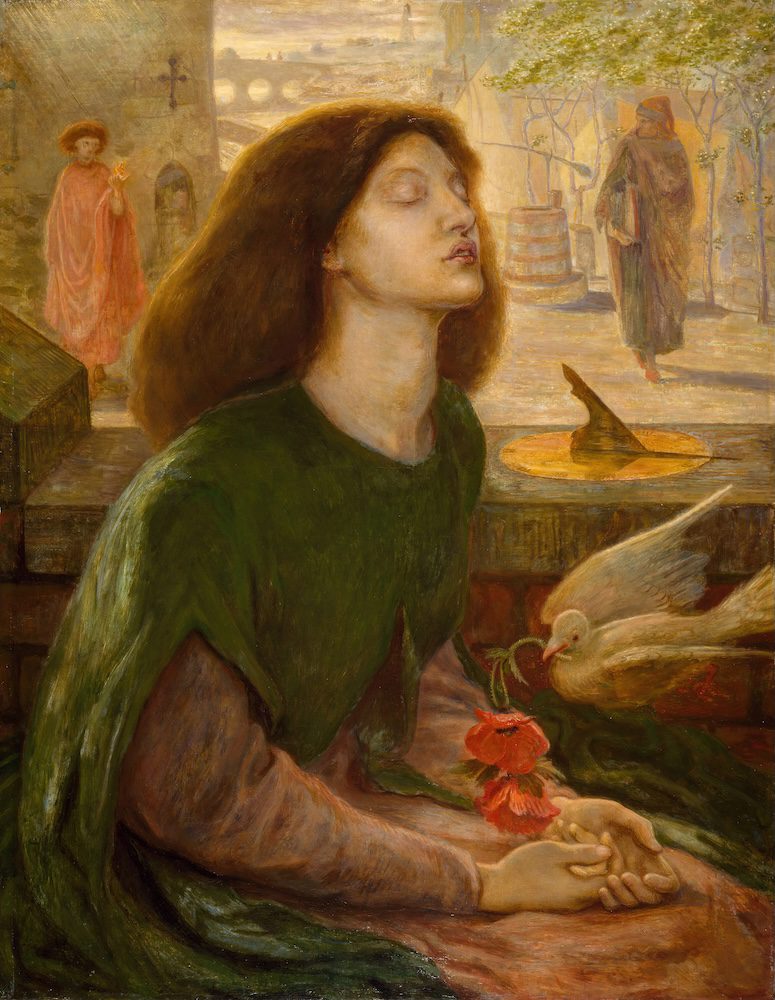
The great season of eighteenth- and nineteenth-century botanical illustration produced extraordinarily refined depictions of Papaver somniferum and Papaver orientale. At the same time, Romantic culture embraced the poppy as a symbol of dreams, intoxication, and melancholy. English Pre-Raphaelite painters — Dante Gabriel Rossetti and John William Waterhouse — made it a recurring attribute of their languid, sleepwalking female figures, suspended between desire and torpor. In France, it was once again Impressionism that offered the most enduring images.
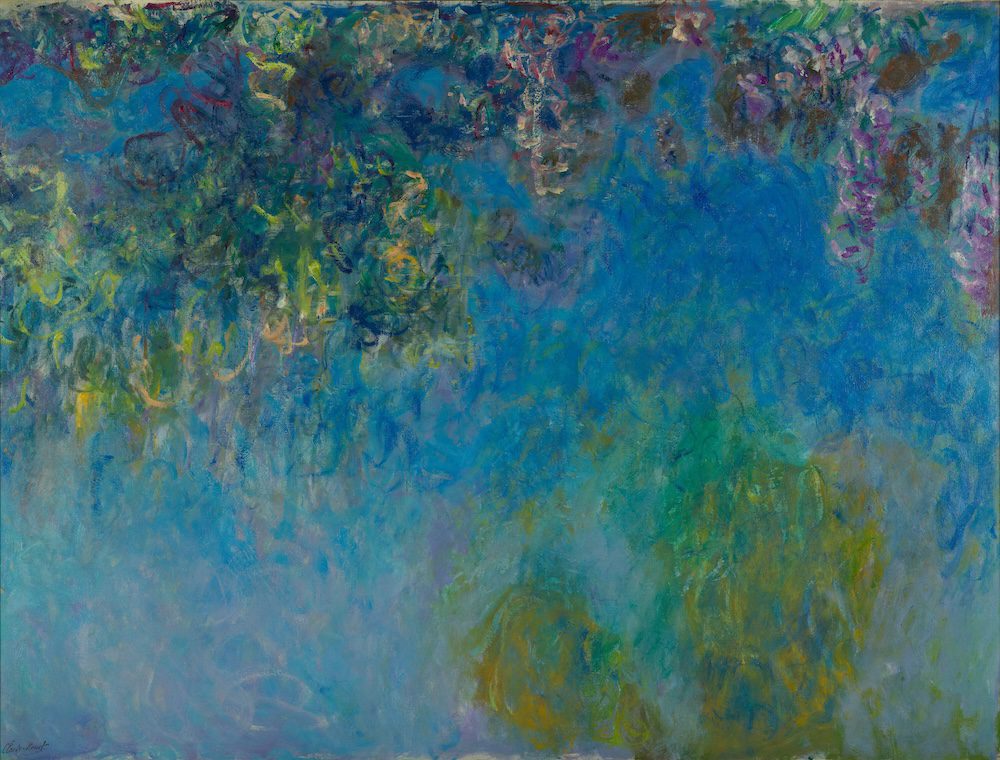
Wisteria was the final floral chapter in Giverny. Monet grew it along the trellises of the Japanese Bridge, forming a fragrant canopy of purple and white reflected in the water below.
In the final years of his life, when cataracts had severely compromised his vision, Monet painted wisteria with increasingly free and bold brushstrokes: long filaments of color dissolving across the canvas like a dream. These late works are almost precursors to Pollock’s dripping technique—an abstraction born not from theory, but from a garden experienced with all the senses.
The most widespread species cultivated in Europe are Wisteria sinensis, native to central China, and Wisteria floribunda, from Japan. Both were introduced to the West in the nineteenth century—the former around 1816, the latter a few decades later—and quickly conquered European gardens, growing at a pace that mirrored the plant itself, capable of extending several meters per year.
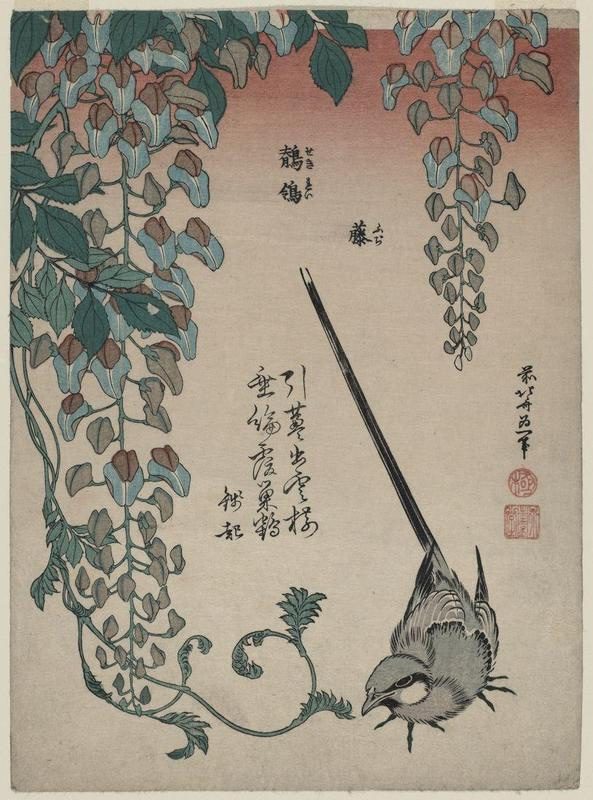
Wisteria is therefore a relatively recent subject in Western art, whose pictorial history is closely tied to the discovery of Japanese art. In Japan, fuji—the Japanese name for wisteria—had long been a favored subject of painting and woodblock printing. Ukiyo-e prints by Hiroshige and Hokusai include wisteria among the seasonal flowers of spring, often depicted on pergolas (fuji-dana) under which visitors gathered in the great flowering parks of Edo.
In Giverny today, everything lives in Monet’s memory: his house is now a museum and home of the Fondation Monet, with its blue kitchen tiles and sun-yellow dining room, and his collection of Japanese prints. The garden is open to the public from April to October and continues to be maintained according to Monet’s original principles: the same flowers, the same varieties, the same harmony of color between canvas and nature.
In this photo campaign by the Centre des monuments nationaux, for which Scala is the worldwide agent, you can see views of the garden and the house of Claude Monet.
If you would like to explore the Scala archive further or need more information about commercial licensing for your projects, please contact info@scalagroup.com.
***
In the cover: Claude Monet standing, facing forward, in front of the bridge at Giverny. Circa 1920. Autochrome – RM02853