On March 26th 1827 Ludwig van Beethoven died in Vienna. Two centuries later, his name continues to resonate with the same power as the Fifth Symphony: inevitable, irreducible, universal. But beyond the music, how many images, documents, and visual stories lie hidden behind the myth?
Within Scala’s archives the life of the musical genius can be explored through portraits, caricatures, objects, and handwritten scores that trace the places where the Maestro lived, composed, and performed his most celebrated works. An entire iconographic universe waits to be discovered, conveniently available for editorial and commercial licensing.
The Face of Ludwig: Between Official Portraits and Candid Glimpses
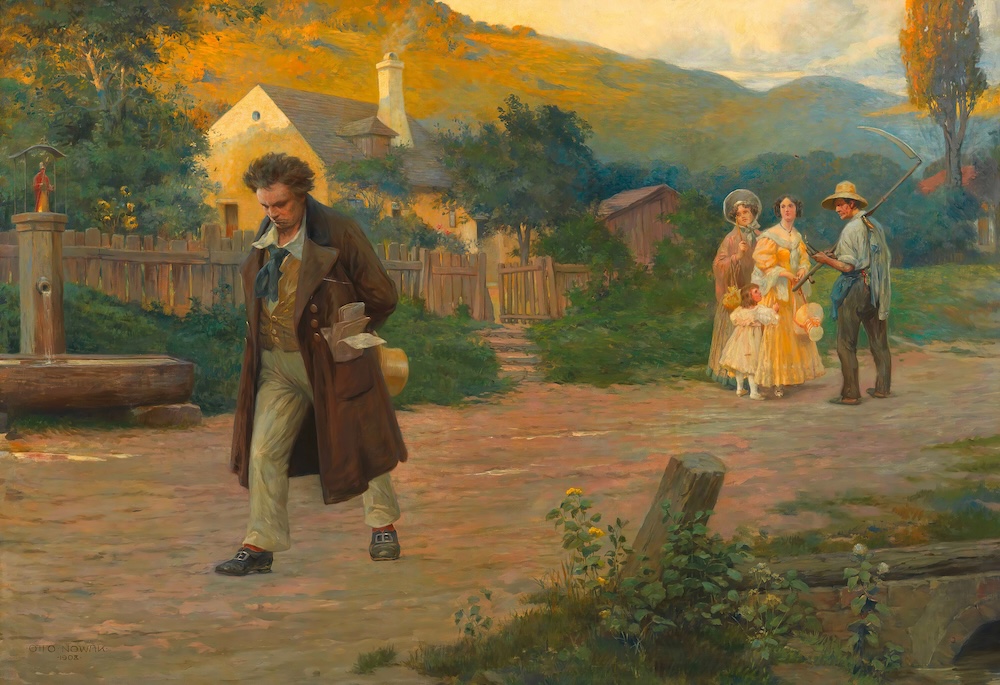
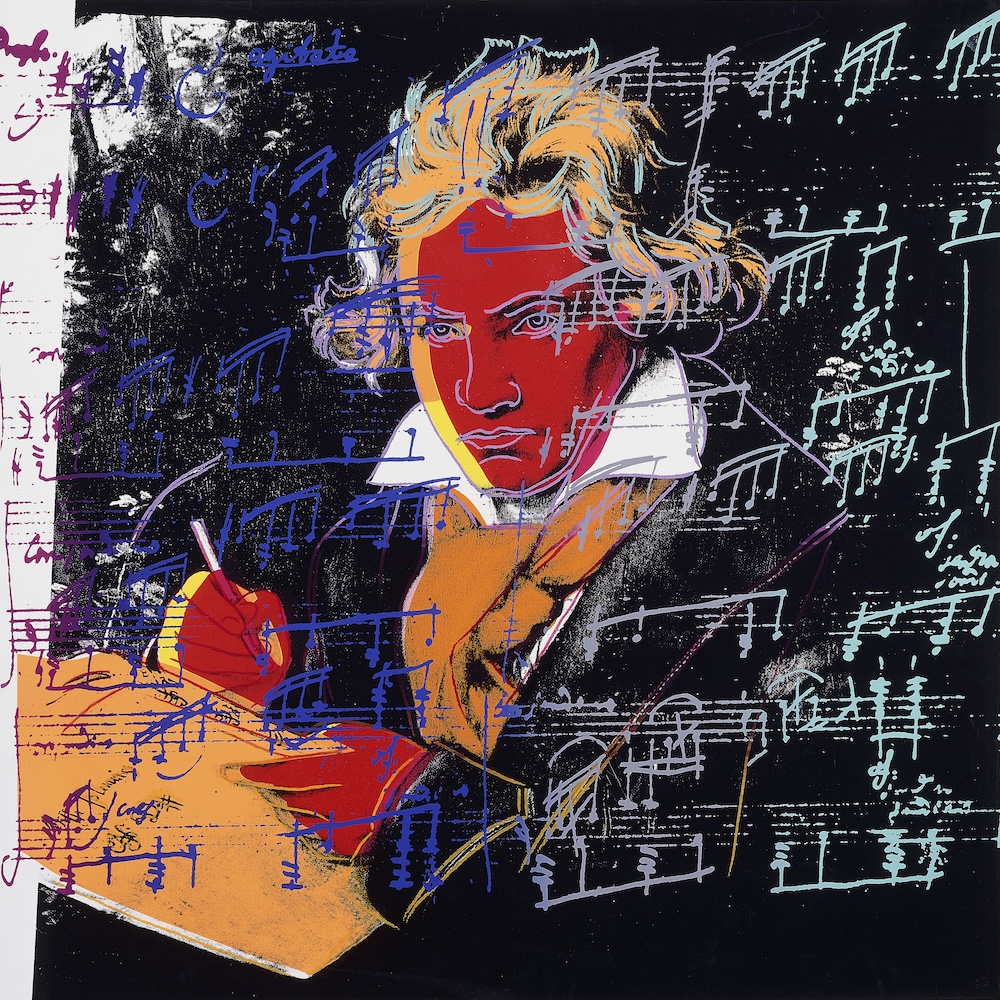
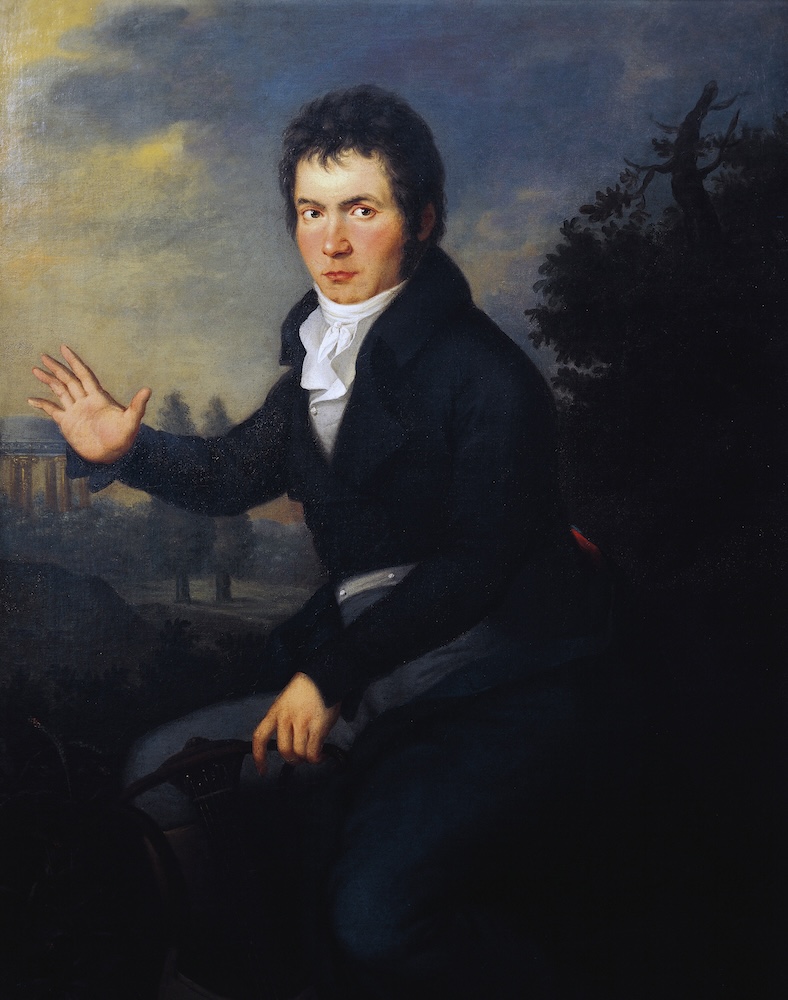
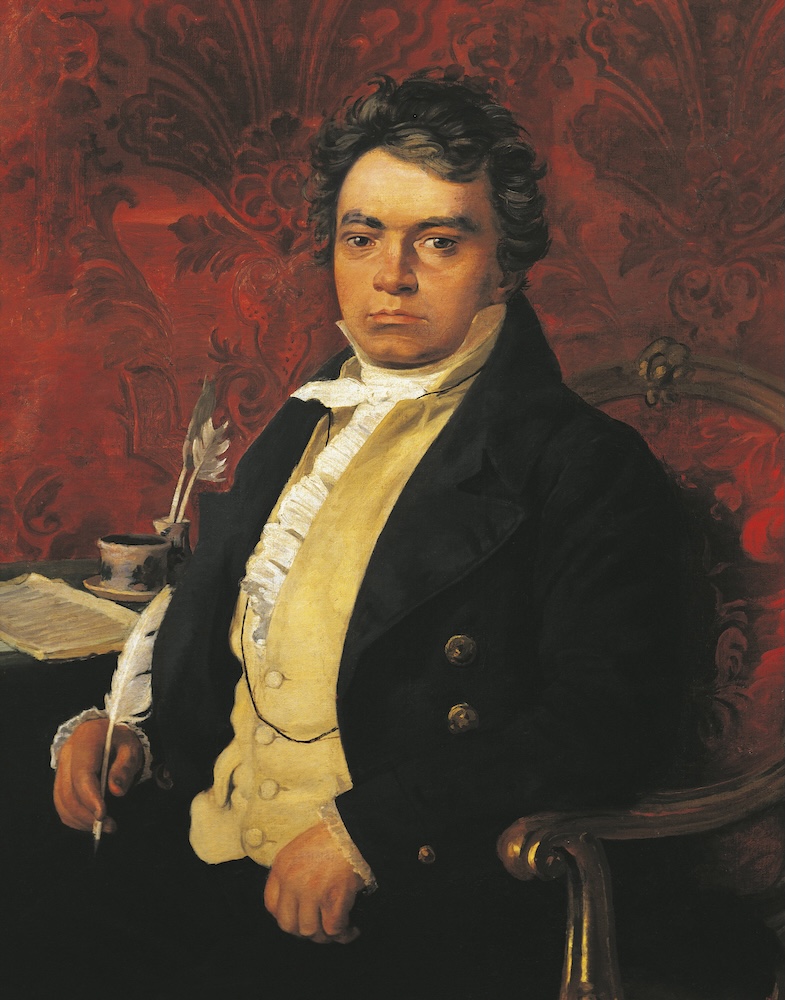
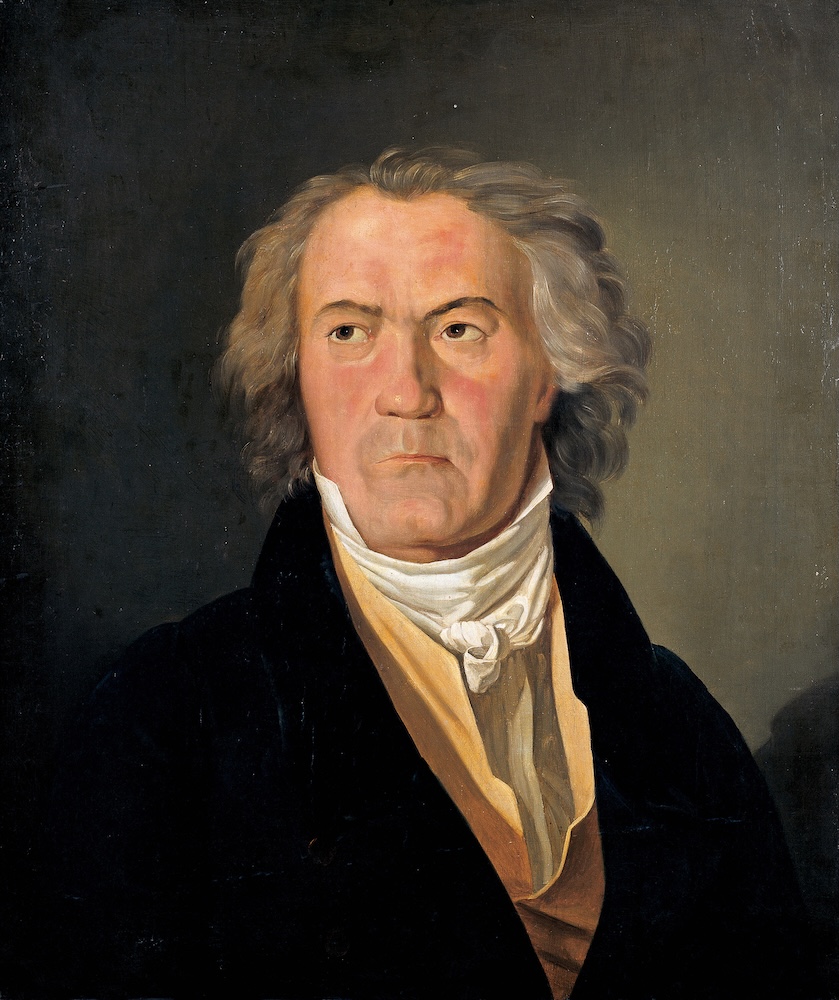
It is well known that Beethoven disliked sitting for portraits. Yet his contemporaries never stopped wanting to capture his likeness: painters, miniaturist, and sculptors took turns trying to fix on paper or canvas the image of that short, stocky man with wild hair and a gaze that seemed to look right through whomever stood before him.
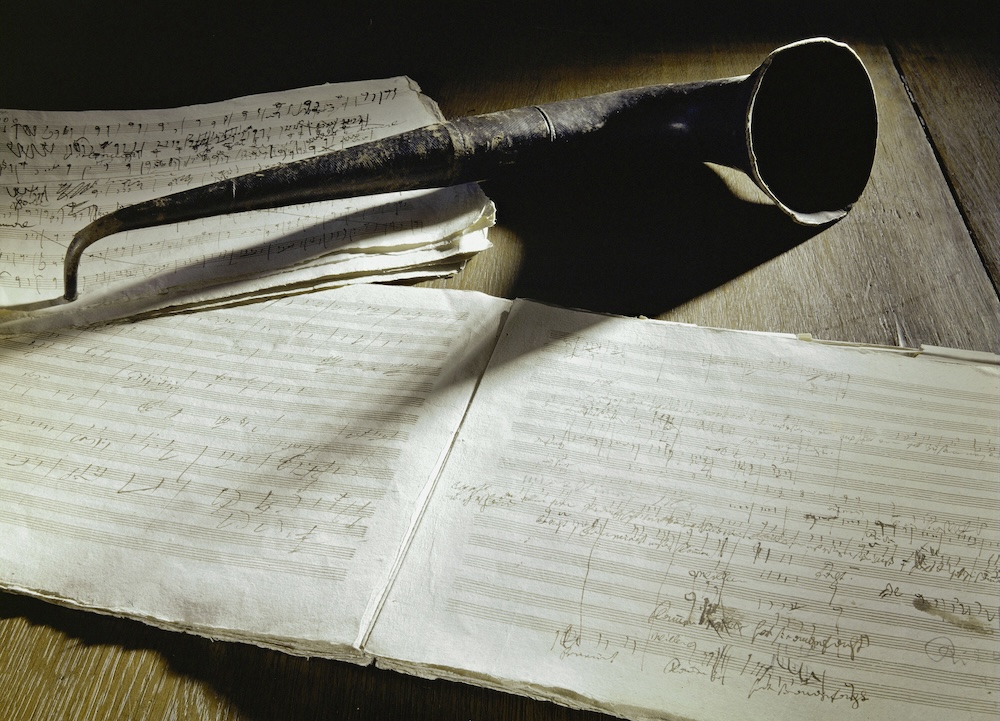
Among the most celebrated portraits that survive, those executed between 1804 and 1820 are the ones that stand out — those are the years of his full creative maturity. Some show him holding sheets of music, as if to remind us that Beethoven’s identity was inseparable from his creations. Others, more intimate, catch him in the privacy of his home, surrounded by ear trumpets and conversation books.
Klimt, the Beethoven Frieze, and a Myth That Lives On
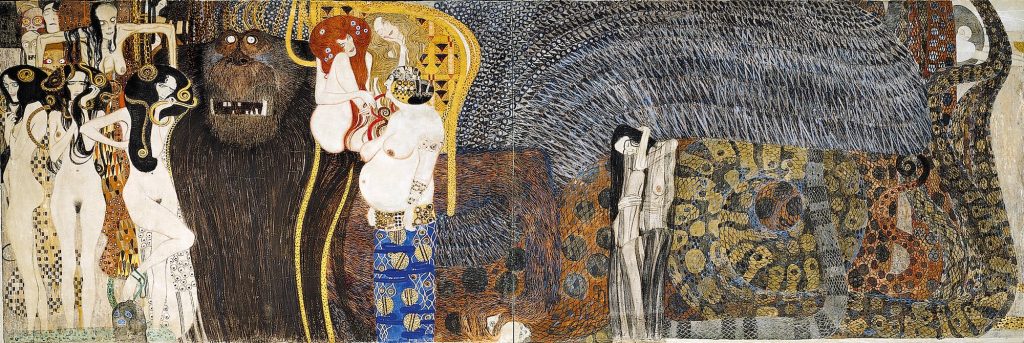
One cannot talk about Beethoven without thinking also of Vienna and Klimt. It was 1902 when Gustav Klimt painted the famous Beethoven Frieze for the 14th Vienna Secession Exhibition, dedicated to the composer. The work — which today is housed in the Vienna Secession building— is an allegory of humanity’s journey toward happiness, inspired by the Beethoven’s Ninth Symphony and by Wagner’s interpretation of it.
Klimt and Beethoven: two faces of the same Vienna, separated by nearly a century yet united by the belief that art can touch the absolute. In Scala’s archives the photographic documentation of the Frieze and the Secession’s context are available alongside materials from the Betovian era, allowing for a visual narrative of the points of contact and influences that stretch all the way into the twentieth century.
The Scores: Manuscripts, First Editions, and the Handwriting of Genius
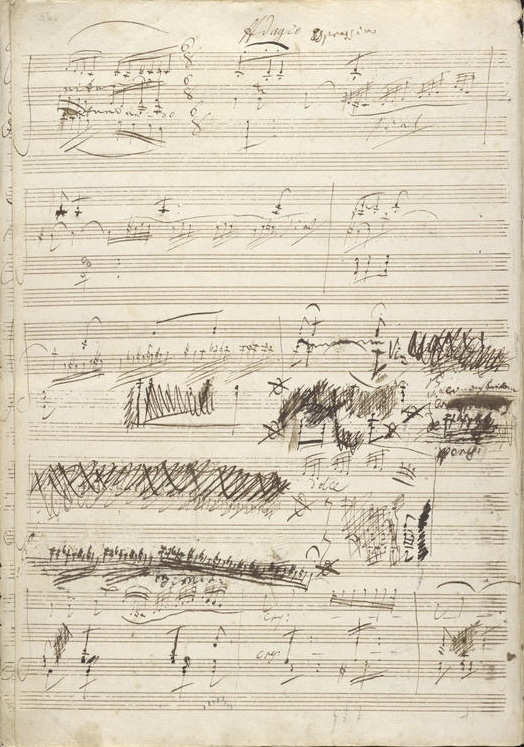
Few objects speak of a composer’s inner world quite like his manuscripts. Beethoven’s handwriting has become almost legendary: frantic, filled with crossed-out passages, and with corrections layered upon corrections. The copyists who worked for him complained about it constantly.
Scala has images of printed first editions, title pages of collections dedicated to illustrious figures (from Haydn to Prince Lobkowitz), and documentation of manuscript pages from landmark works. Every page is a window into the creative life of a composer who labored, suffered, and rewrote without rest.
The Study, the Objects, Everyday Life
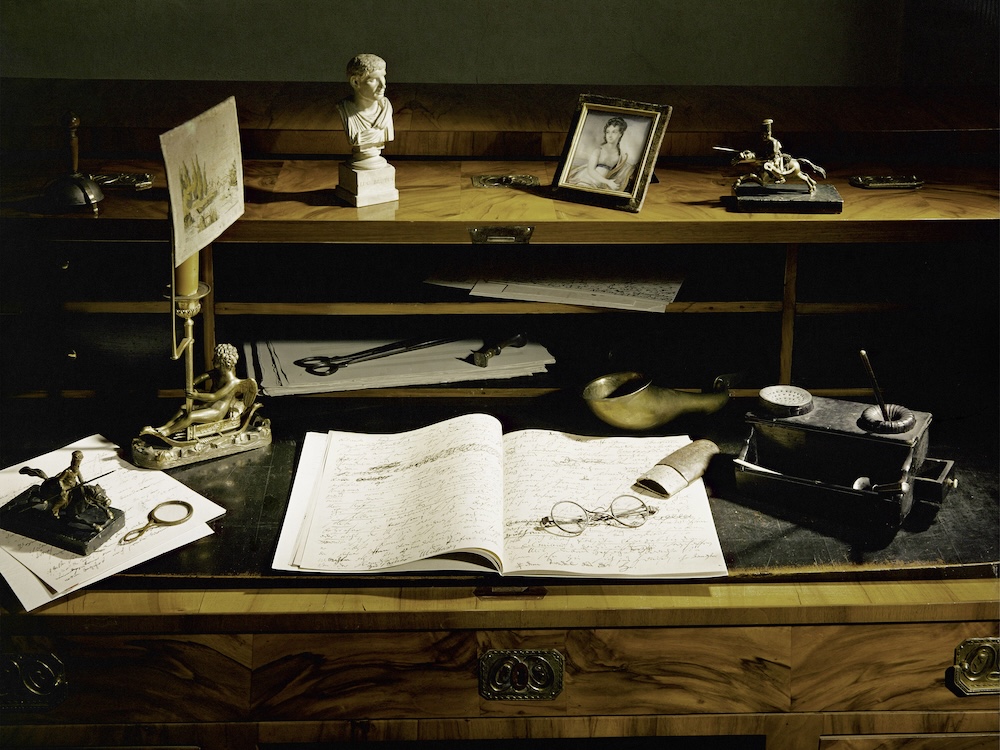
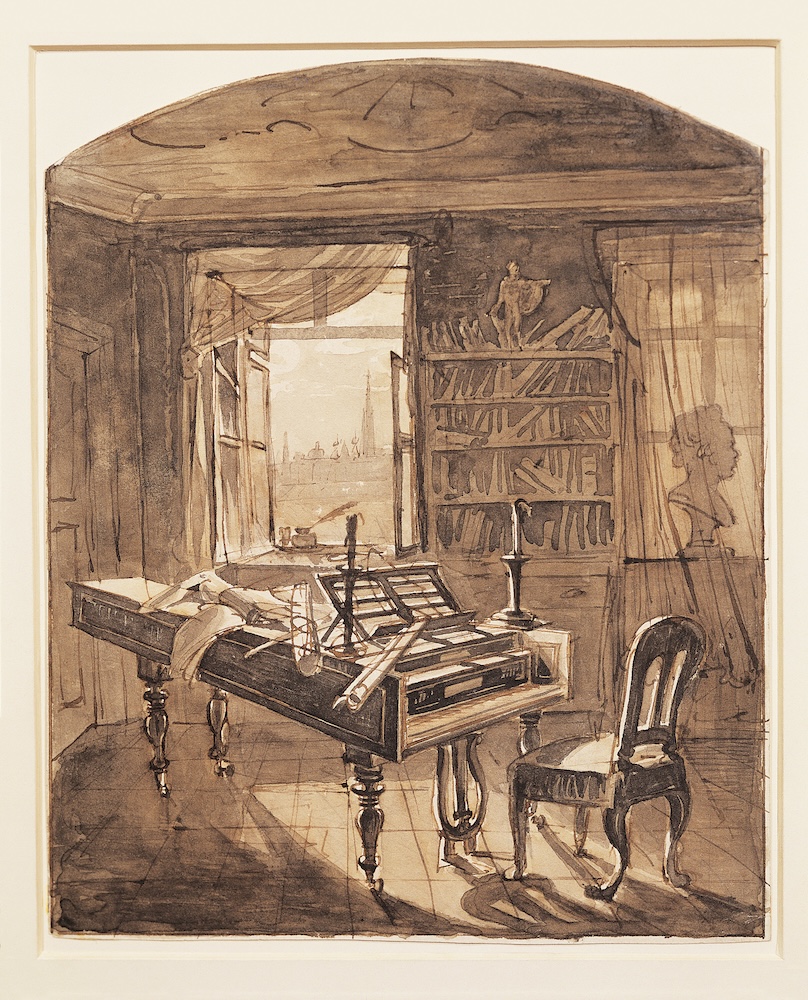
What was in Beethoven’s room? The answer is: monumental chaos. Visitors who came to call on him — from Goethe to Schubert — described apartments cluttered with papers, inkbottles, handmade ear trumpets, and the remnants of meals eaten distractedly.
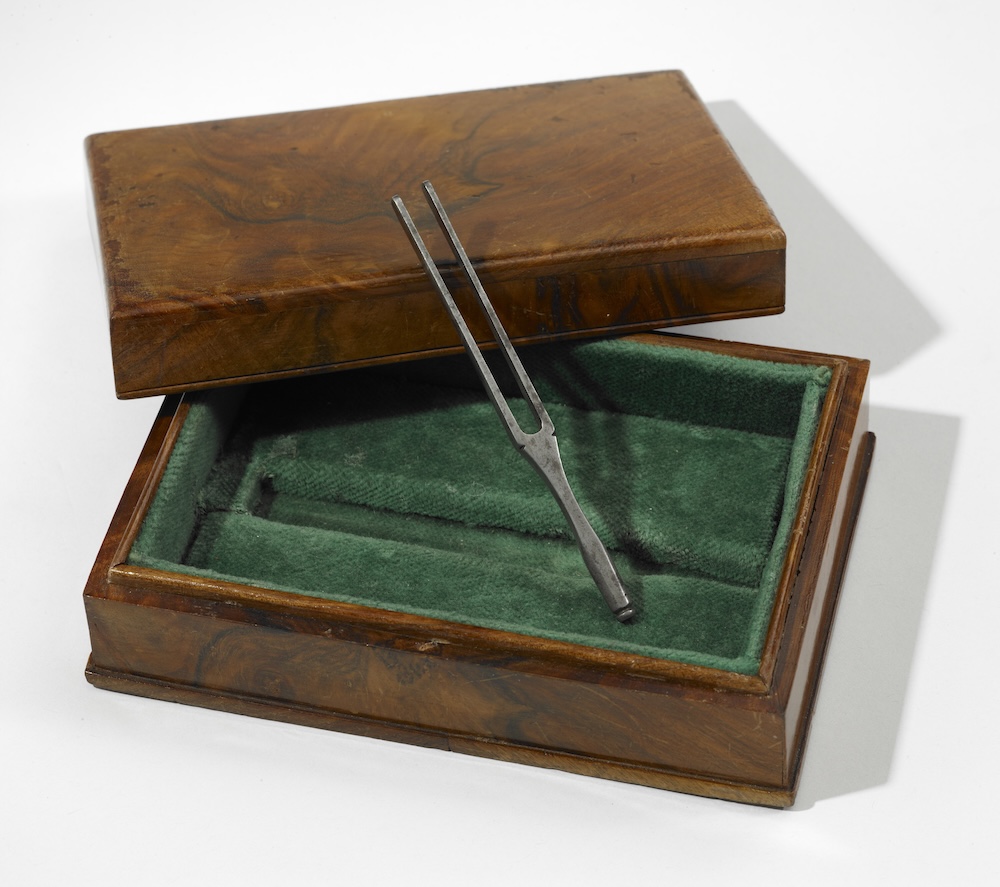
Photographs and illustrations of Beethoven’s living spaces — his Vienna study and his vacation retreats such as Heiligenstadt — depict his chaotic yet fertile everyday life. Among the most moving objects: the Konversationshefte, the conversation books Beethoven used to communicate with the world once his deafness had become total. Small notebooks in which friends and acquaintances would write questions, jokes, and news — and he would answer out loud.
Over the course of his life, in Vienna, Beethoven changed more than 60 apartments. He quarreled with landlords, neighbors, and doormen. By all accounts, he was a nightmare tenant and an absolute genius.
The bicentennial of Beethoven’s death in 2027 will be the occasion for exhibitions, concerts, publications, and audiovisual productions around the world. If you would like to explore this topic further, request a personalized search.
****