In 2026, we commemorate the centenary of the death of Antoni Gaudí i Cornet (1852-1926), the Catalan architect who revolutionized modern architecture and transformed Barcelona into an open-air museum. An undisputed master of Catalan Modernism, Gaudí created works that continue to astonish and inspire millions of visitors from around the world, and are an artistic legacy that transcends temporal and geographical boundaries. In 2026 Barcellona is set to also witness the completion of the Sagrada Familia.
Scala Archives, known for its commitment to the systematic documentation of the architectural evolution of cities, is pleased to offer a brief visual tour through Gaudí’s major works in Barcelona.
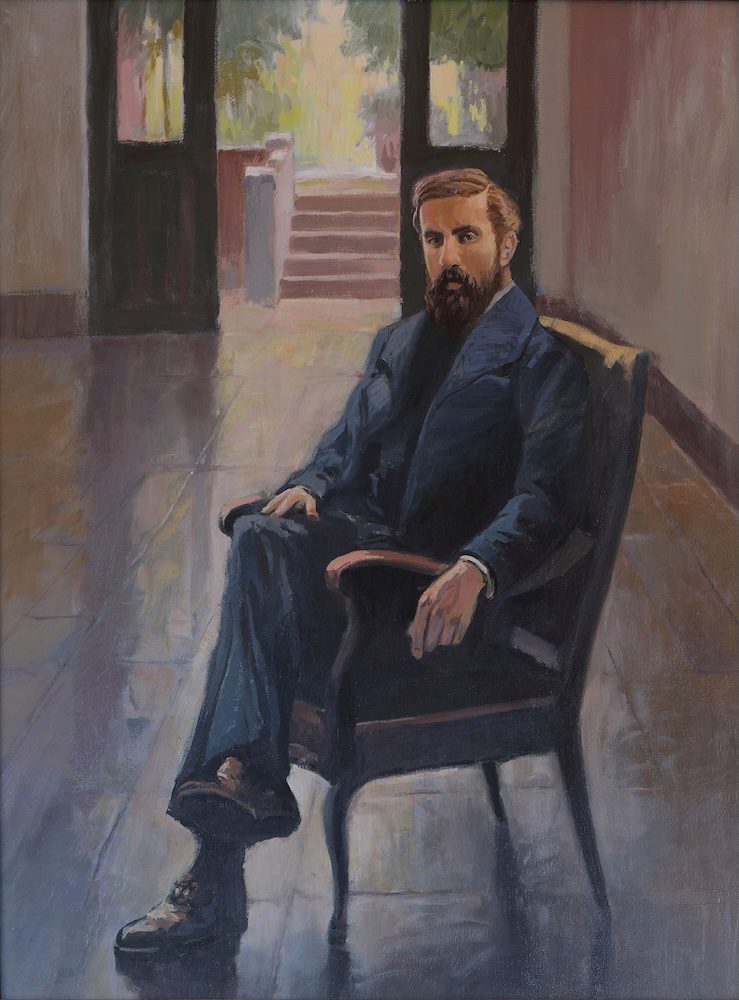
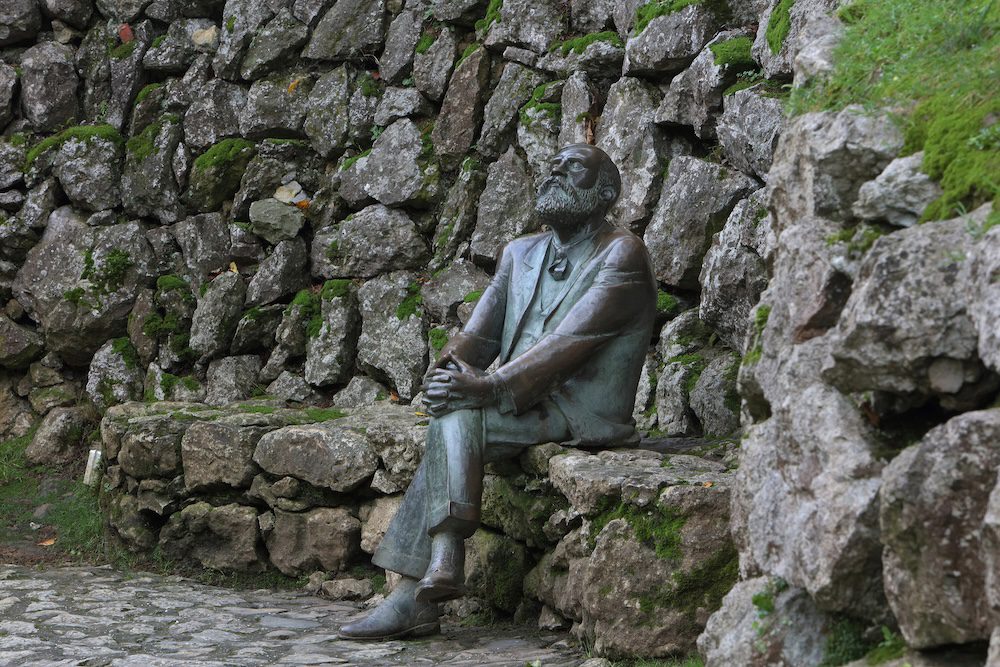
Antoni Gaudí was born on June 25, 1852, in Reus, Catalonia, or perhaps in the nearby village of Riudoms, to a family of coppersmiths. This artisan background proved fundamental to his training: from childhood, watching his father work copper, he understood the importance of mentally visualizing three-dimensional objects before creating them—a skill that became the foundation of his design method.
His frail health during childhood forced him into long convalescences in the countryside, where he developed a deep and meticulous observation of nature. These moments of solitary contemplation shaped his architectural philosophy: nature became for Gaudí not only a source of inspiration but a true building manual, where every form had a precise function and every structure responded to perfect laws.
In 1873, he moved to Barcelona to study architecture at the Escola Superior d’Arquitectura. His university years were marked by inconsistent results but voracious intellectual curiosity: he studied philosophy, history, economics, aesthetics, and regularly attended concerts and theatrical performances.
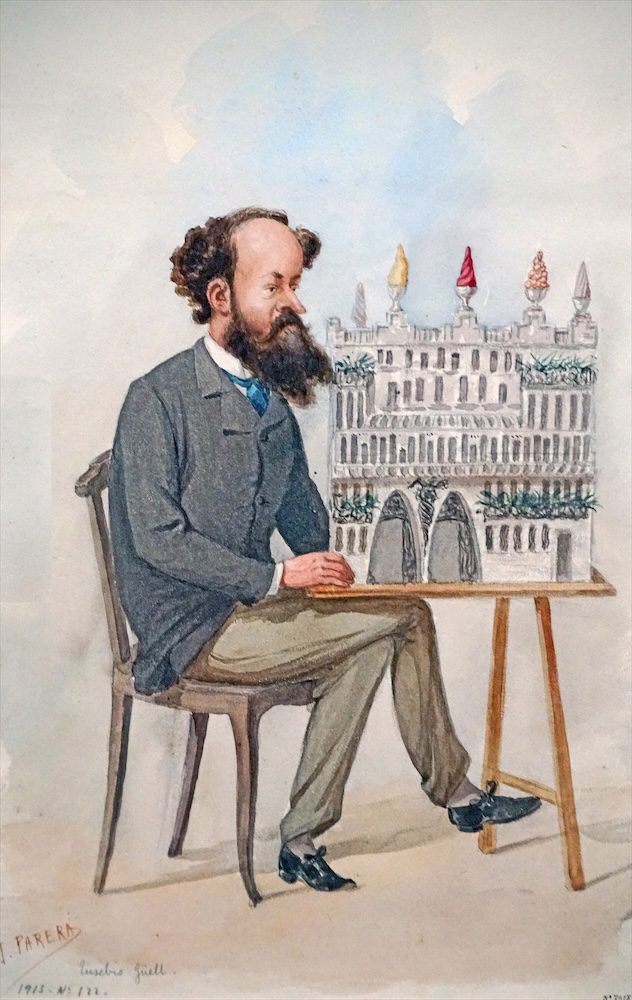
The real turning point in Gaudí’s career came in 1878, when he met Eusebi Güell, a wealthy industrialist, patron, and visionary, at the Paris World’s Fair. Güell was struck by the young architect’s talent after seeing a display window that Gaudí had designed for a glove maker. Thus began a friendship and collaboration that lasted almost fifty years and produced some of the most extraordinary works in world architecture.
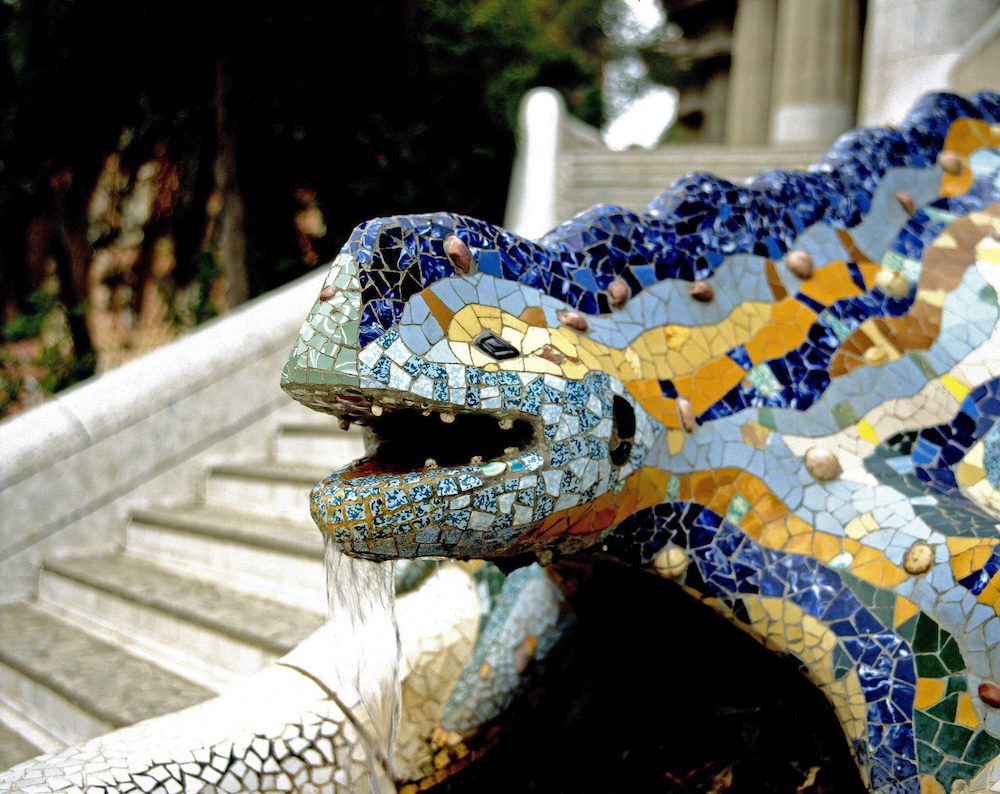
Between 1900 and 1914, Gaudí designed Park Güell for the Güell family, initially conceived as a luxury garden city on the English model. Although the real estate project failed, Gaudí created a fantastical universe where architecture and nature merge in perfect harmony. The hypostyle hall with its inclined columns that resemble tree trunks, the serpentine bench covered in trencadís (broken ceramic mosaics), the structures that seem to emerge organically from the rock: every element of the park testifies to the genius of an architect who thought in radically different ways from his contemporaries.
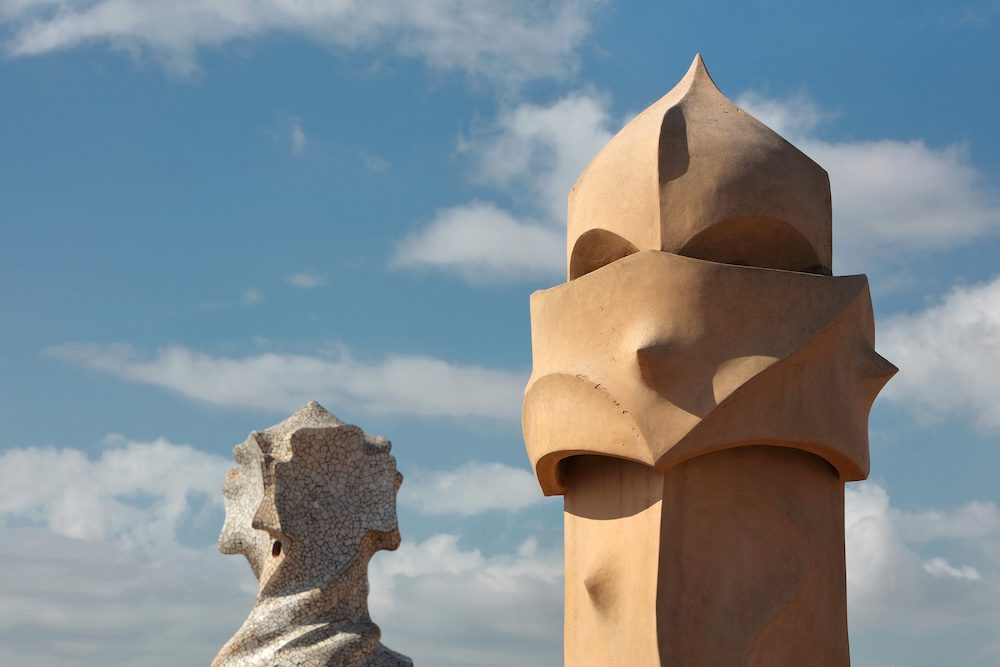
Casa Milà, known as La Pedrera (“the stone quarry”), built between 1906 and 1912, perhaps represents the most complete expression of Gaudí’s artistic maturity. The undulating facade evokes ocean waves or the Montserrat mountains, while the interior is a labyrinth of fluid spaces without load-bearing walls, anticipating by decades the principles of modern architecture. The roof terrace, populated by chimney-sculptures that resemble medieval warriors or prehistoric creatures, is a surrealist theater that foreshadows twentieth-century art.
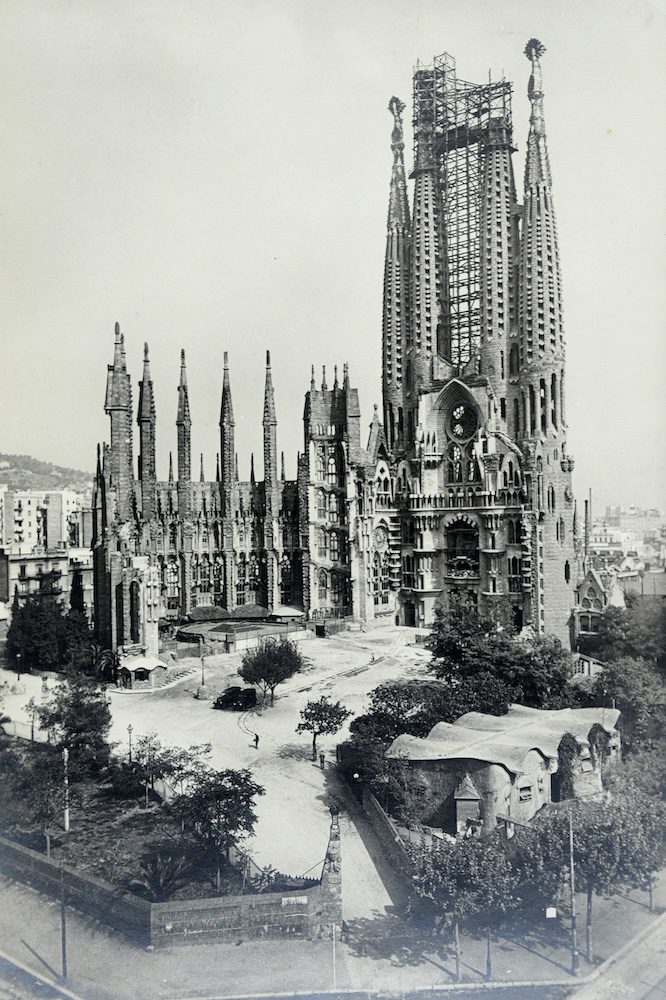
In 1883, at only 31 years old, Gaudí took over direction of the construction of the Sagrada Familia, succeeding architect Francisco de Paula del Villar. What was meant to be one assignment among many became the obsession of a lifetime. For forty-three years, Gaudí dedicated all his creative energies to this expiatory temple, gradually transforming it from a neo-Gothic project into an unprecedented architectural vision.
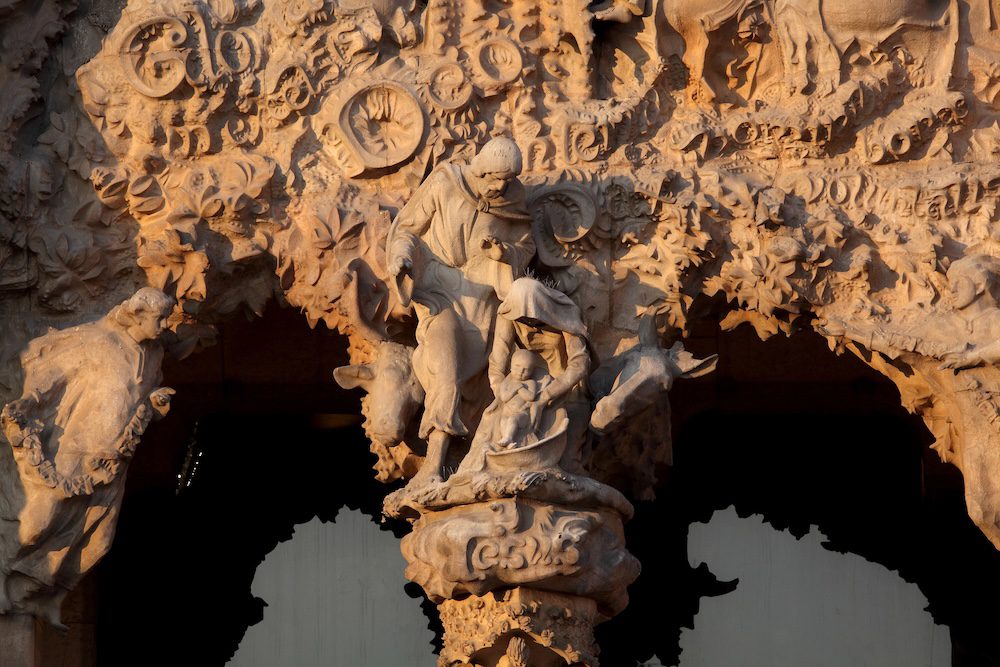
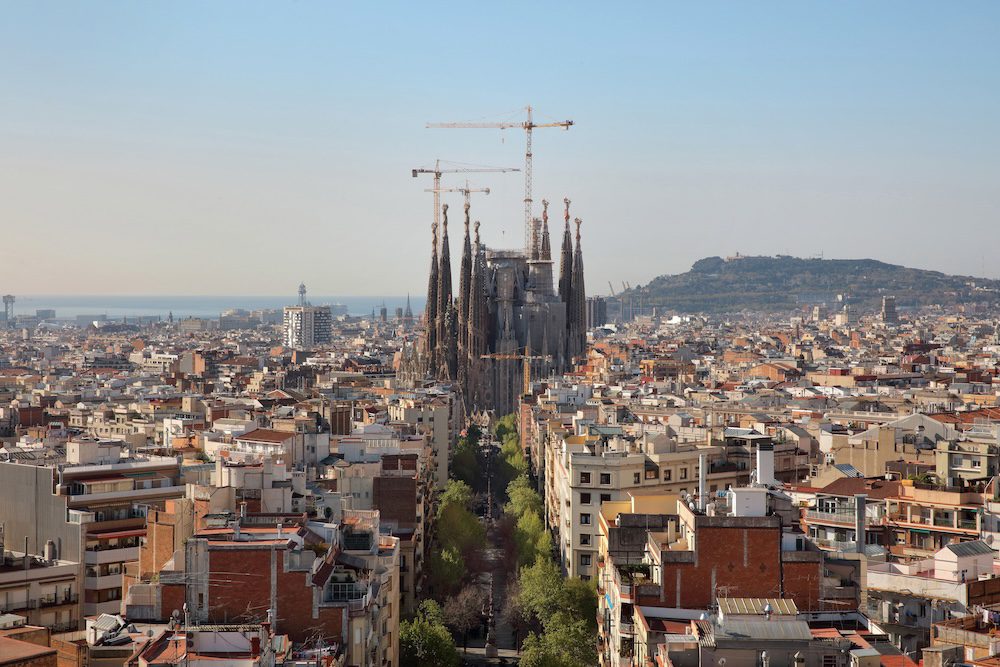
The Sagrada Familia is a theological poem carved in stone, a “Bible in stone” where every element has profound symbolic meaning. The three facades represent the Nativity (to the east, where the sun rises), the Passion (to the west, where the sun sets), and Glory (to the south, the most grandiose, still incomplete). The eighteen towers, when completed, will represent the twelve apostles, the four evangelists, the Virgin Mary, and, at the center, Jesus Christ with a tower of 172.5 meters—deliberately lower than Mount Montjuïc because, Gaudí said, “man’s work must not surpass God’s.”
Gaudí studied natural geometric forms at length—hyperbolic paraboloids, helicoids, conoids—to create structures that were simultaneously aesthetically perfect and structurally efficient. The temple’s interior columns branch out like trees toward the ceiling, creating a stone forest where light filters through polychrome stained glass that transforms the interior into a kaleidoscope of colors.
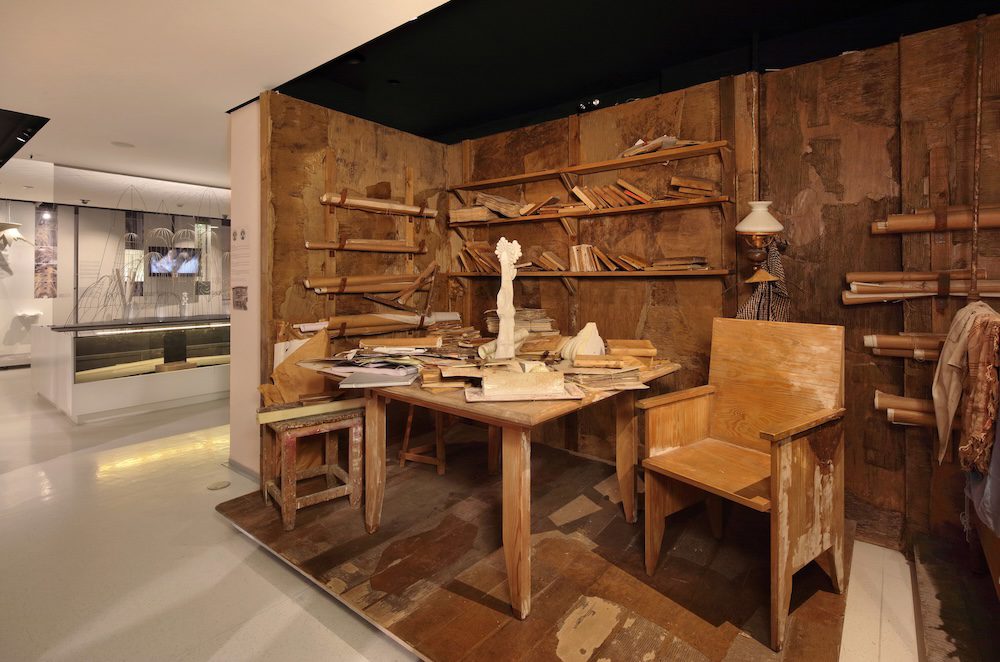
In the final years of his life, Gaudí lived practically inside the Sagrada Familia construction site, in a small room filled with plaster models and drawings. He had abandoned every other project, every personal comfort, dedicating himself body and soul to his temple. He dressed shabbily, ate little, attended mass daily. He had become an ascetic of architecture, a mystic of form.
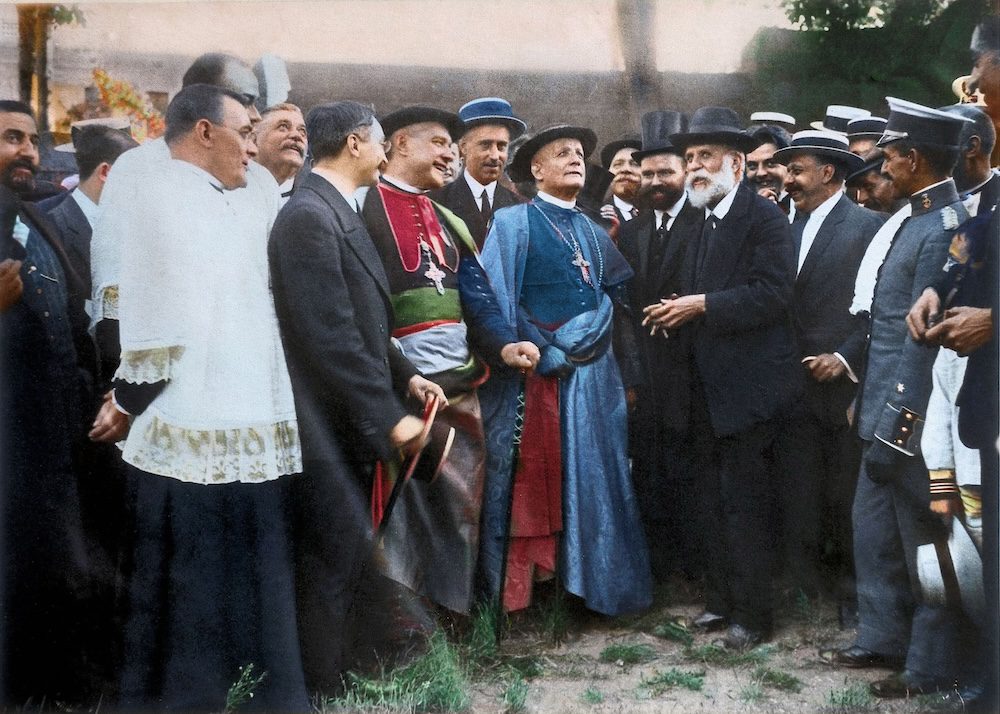
On June 7, 1926, while walking to the church of Sant Felip Neri for his daily prayers, Gaudí was hit by a tram on Gran Via. His worn clothes caused him to be mistaken for a beggar, and he received necessary care only belatedly. He died three days later, on June 10, 1926, at the Hospital de la Santa Creu. Thousands of Barcelona residents attended his funeral, and he was buried in the crypt of the Sagrada Familia, the monument of his life.
Want to see the complete portfolio of photos of the Sagrada Familia? Click here
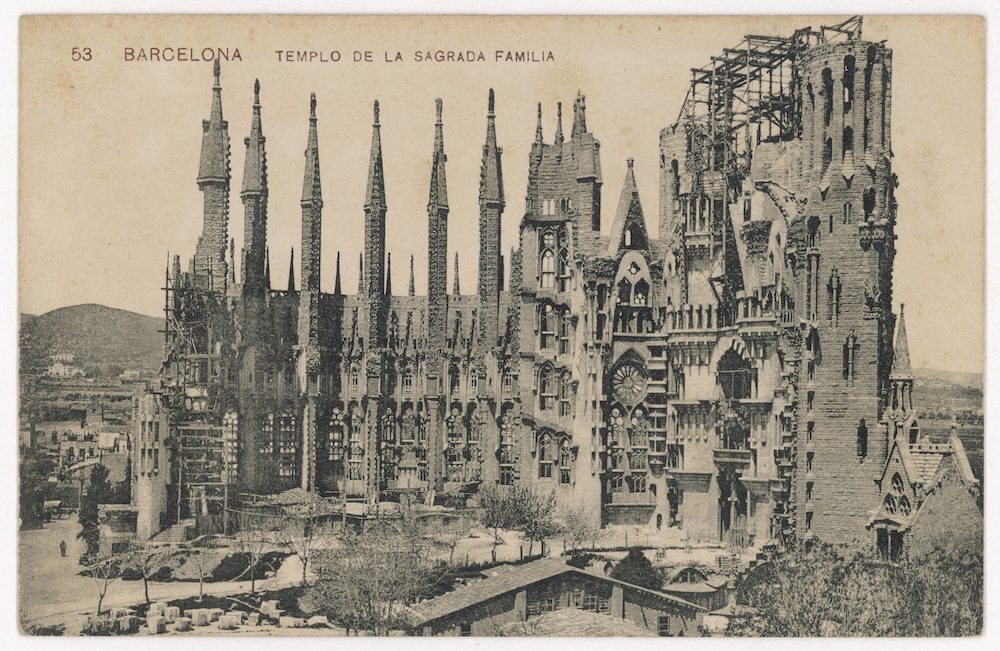
The Sagrada Familia represents a unique case in the history of architecture: a building under construction for over 140 years, continuing to evolve following Gaudí’s original design but interpreted through contemporary technologies. This continuity between past and present makes photographic documentation of the temple particularly precious and complex.
Scala Archives collaborates with international agencies and photographers, thus offering an extensive collection of images dedicated to the Sagrada Familia, allowing observation of this extraordinary construction site’s evolution over the decades. From the first historical images showing the towers of the Nativity facade—the only part substantially completed under Gaudí’s direction—to the most recent documentation recording progress toward the projected completion, each photograph becomes a fundamental piece to understand how the dream of a genius is materializing stone by stone.
The photographic documentation of the Sagrada Familia takes on particular significance today: as the temple approaches completion, these images allow us to trace the entire construction history, to compare the different design phases, and to appreciate the incredible fidelity with which contemporary architects are interpreting Gaudí’s original intentions, based on his sketches, plaster models, and historical studies.
In questo contesto di documentazione e valorizzazione del patrimonio architettonico mondiale, Scala Archives rappresenta una risorsa fondamentale non solo per la conservazione della memoria storica, ma anche per la comprensione dei cambiamenti urbani e architettonici in corso. La collezione di immagini dedicate all’architettura catalana e alle opere di Gaudí
In this context of documenting and promoting world architectural heritage, Scala Archives represents a fundamental resource not only for preserving historical memory but also for understanding ongoing urban and architectural changes. The collection of images dedicated to Catalan architecture and Gaudí’s works which includes not only the Sagrada Familia but also Casa Batlló, La Pedrera, Park Güell, and his other masterpieces—represents an irreplaceable resource for scholars, architects, urban planners, journalists, and publishers who wish to narrate Barcelona’s evolution from industrial city to world capital of Modernism and cultural tourism.
If you’d like to explore this topic further or are looking for specific images of Gaudí’s works and the Sagrada Familia, contact our team of expert researchers and find the right image for your project.
***
Cover: Star of the Virgin Mary, Sagrada Familia Basilica, Barcelona, Catalonia, Spain – MC30359